A Reflection from My Southend-on-Sea Studio
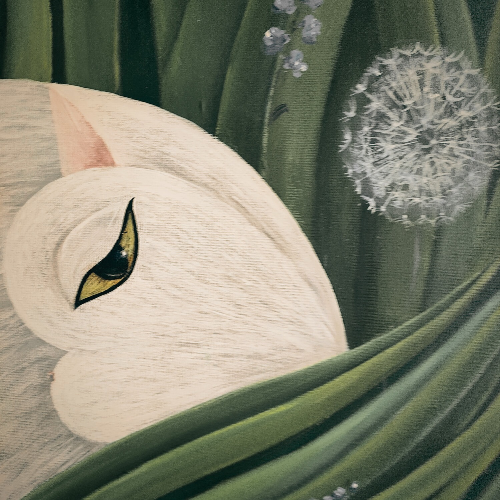
There’s something magical about the early morning light in my studio, the way it catches the texture of an acrylic brushstroke, revealing every subtle variation in the paint’s surface. As I prepare my palette for today’s work – a geometric black cat against a backdrop of spring wildflowers – I’m struck by how deeply physical the act of painting remains, even in our increasingly digital world.
The Meditation of Making
In an age where art can be generated with a few keystrokes, the physical act of painting takes on new significance. Each morning, as I arrange my brushes and squeeze fresh paint onto my palette, I’m participating in a ritual that connects me to countless artists throughout history. The smell of acrylic paint, the sound of brush bristles against canvas, the slight resistance as I blend colors – these sensory experiences are irreplaceable aspects of the creative process.
The Intelligence of the Hand
When I create my nature-inspired artwork or pet portraits, my hands hold decades of accumulated wisdom:
– The precise pressure needed to achieve a clean geometric line
– The intuitive understanding of how paint will flow and blend
– The muscle memory that guides each brushstroke
– The physical dialogue between artist and medium
This bodily knowledge, what philosophers call “tacit knowledge,” cannot be replicated by digital tools. It’s a form of intelligence that resides not in our minds alone, but in the intimate connection between hand, eye, and material.
The Role of Physical Craft in the Digital Age
As someone who works primarily with traditional media, I’ve come to understand that physical craft offers unique benefits that digital creation cannot replicate:
1. Tactile Feedback
– The immediate response of materials
– The unpredictable interactions between elements
– The physical evidence of the creative process
2. Embodied Learning
– Knowledge gained through repetition and practice
– Understanding that comes from physical engagement
– Skills that develop through tactile experience
3. Material Dialogue
– The way different papers accept paint
– How humidity affects drying time
– The unique characteristics of each brush
4. Present Moment Awareness
– The meditative quality of physical work
– The focus required for precise execution
– The grounding nature of material interaction
Finding Balance in a Digital World
While I embrace certain digital tools in my practice, particularly for planning and promotion, the core of my work remains firmly rooted in traditional techniques. This choice isn’t about rejecting technology – it’s about recognizing the unique value of physical craft in our digital age.
When I create my geometric cat portraits or nature-inspired pieces, I’m conscious of how digital tools can enhance rather than replace traditional methods:
– Using digital sketching for initial composition
– Photographing work in progress for documentation
– Sharing process videos with my audience
– Planning color schemes digitally before mixing paint
The Importance of Slowing Down
In our fast-paced digital world, traditional art-making offers something increasingly precious: the opportunity to slow down. When I’m working on an intricate geometric pattern or blending colors for a sunset sky, time takes on a different quality. There’s no “undo” button in traditional art – each mark requires presence and intention.
Looking Forward
As we continue to navigate the relationship between traditional and digital creation, I believe the key lies not in choosing one over the other, but in understanding their unique values. Traditional art-making offers:
– A connection to our physical world
– The satisfaction of tangible creation
– A space for meditation and presence
– The development of embodied knowledge
Questions for Fellow Artists:
– How does physical craft inform your creative process?
– What aspects of traditional art-making do you find irreplaceable?
– How do you balance traditional and digital tools in your practice?
Next in this series, we’ll explore “AI Art: Tool or Artist? Redefining Creativity in the Digital Age,” where we’ll examine how artificial intelligence is reshaping our understanding of creativity while highlighting the enduring value of human artistic expression.
- Behind-the-scenes of Artwork Creation
- History of Art
- Local Art Scene in Southend-on-Sea
- Nature and Cat Art Technics
- Navigating Social Media & AI in Art in 2025
- Seasonal Reflections
- Thoughts on AI Art, Traditional Art, and Creativity
- Uncategorized

 Milena Skulimowska Visual Artist
Leave a comment