A Journey Through Mixed Media from My Southend Studio
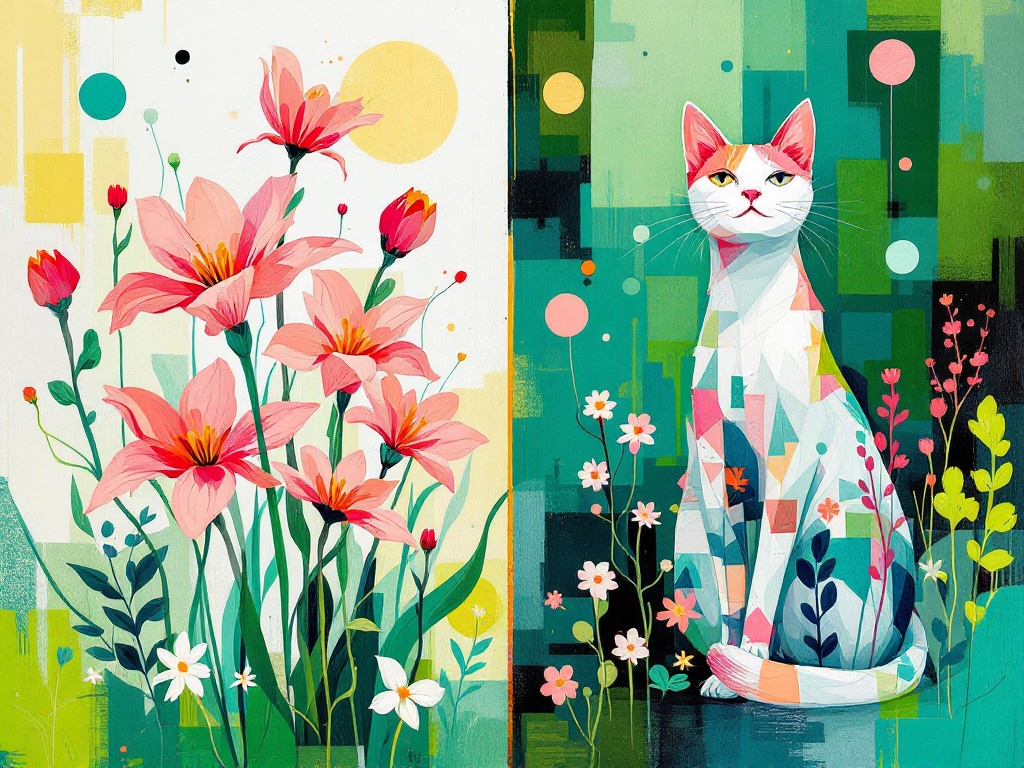
The gentle scratch of brush against canvas mingles with the soft hum of my computer as I work on my latest geometric cat portrait. This harmony of sounds perfectly represents my current artistic journey – finding balance between traditional craft and digital tools. As both a traditional artist and someone who embraces technology, I’ve discovered that these two worlds don’t have to compete; they can dance together.
The Digital-Traditional Dance
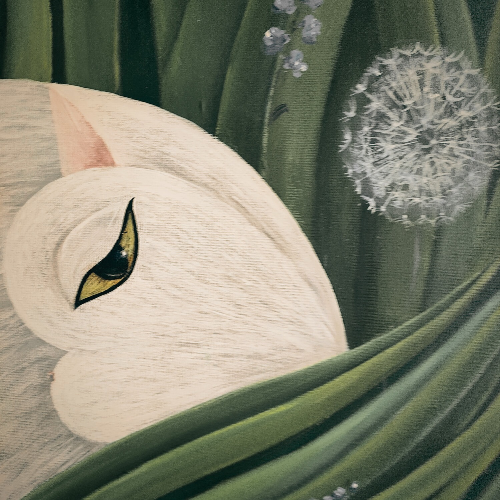
In my current spring collection, featuring pieces like “White Cat with Dandelions” and “Black Cat with Mixed Dandelions,” the creative process involves both worlds:
– Initial geometric patterns sketched digitally
– Color combinations tested in digital space
– Final execution in traditional acrylic
– Digital documentation of the process
– Online sharing and community engagement
This hybrid approach has enriched rather than diminished the authentic artistic experience.
Finding the Sweet Spot
Through five years of professional practice, I’ve discovered where digital tools enhance rather than replace traditional techniques:
1. Planning and Preparation
– Digital sketching for initial compositions
– Color palette experimentation
– Pattern development
– Reference organization
2. Process Documentation
– Capturing work-in-progress moments
– Creating engaging TikTok content
– Sharing behind-the-scenes insights
– Building connection with audience
3. Community Engagement
– Sharing process videos
– Connecting with fellow artists
– Building relationships with clients
– Gathering feedback and inspiration
Maintaining Artistic Authenticity
While embracing digital tools, I’ve established clear principles for maintaining the soul in my work:
1. Core Creation Remains Traditional
– All final pieces hand-painted in acrylic
– Physical color mixing and application
– Traditional techniques for texture and detail
– Authentic brushwork and human touch
2. Digital Tools as Enhancement
– Supporting the creative process
– Expanding possibilities
– Streamlining workflow
– Enhancing presentation
3. Balanced Integration
– Using technology thoughtfully
– Preserving traditional techniques
– Maintaining artistic integrity
– Creating authentic connections
The Power of Both Worlds
This balanced approach has allowed me to:
– Create more efficiently while maintaining quality
– Experiment safely before committing to canvas
– Document and share my artistic journey
– Build a stronger connection with my audience
– Preserve the authenticity of traditional art
Practical Applications
In my current practice, this harmony manifests in various ways:
For Pet Portraits:
– Digital sketches for client approval
– Traditional execution in acrylic
– Process documentation for TikTok
– Online sharing and engagement
For Nature-Inspired Pieces:
– Digital pattern development
– Traditional painting techniques
– Behind-the-scenes content creation
– Online portfolio presentation
Looking Forward
As technology continues to evolve, maintaining this balance becomes increasingly important. The key isn’t choosing between traditional and digital – it’s understanding how to use both to enhance our artistic expression while preserving what makes our art uniquely human.
Questions for Fellow Artists:
– How do you balance traditional and digital elements in your work?
– What digital tools have enhanced your traditional practice?
– How do you maintain authenticity while embracing technology?
Next in our series, we’ll explore “The Future of Creativity: A Human-Centered Approach,” where we’ll examine how to maintain authentic artistic expression in an increasingly digital world.
- Behind-the-scenes of Artwork Creation
- History of Art
- Local Art Scene in Southend-on-Sea
- Nature and Cat Art Technics
- Navigating Social Media & AI in Art in 2025
- Seasonal Reflections
- Thoughts on AI Art, Traditional Art, and Creativity
- Uncategorized

 Milena Skulimowska Visual Artist
Leave a comment