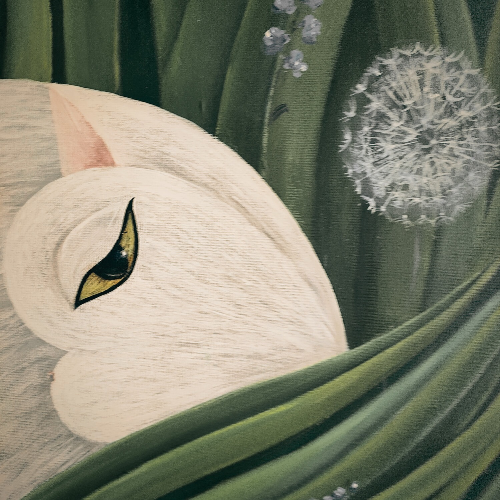

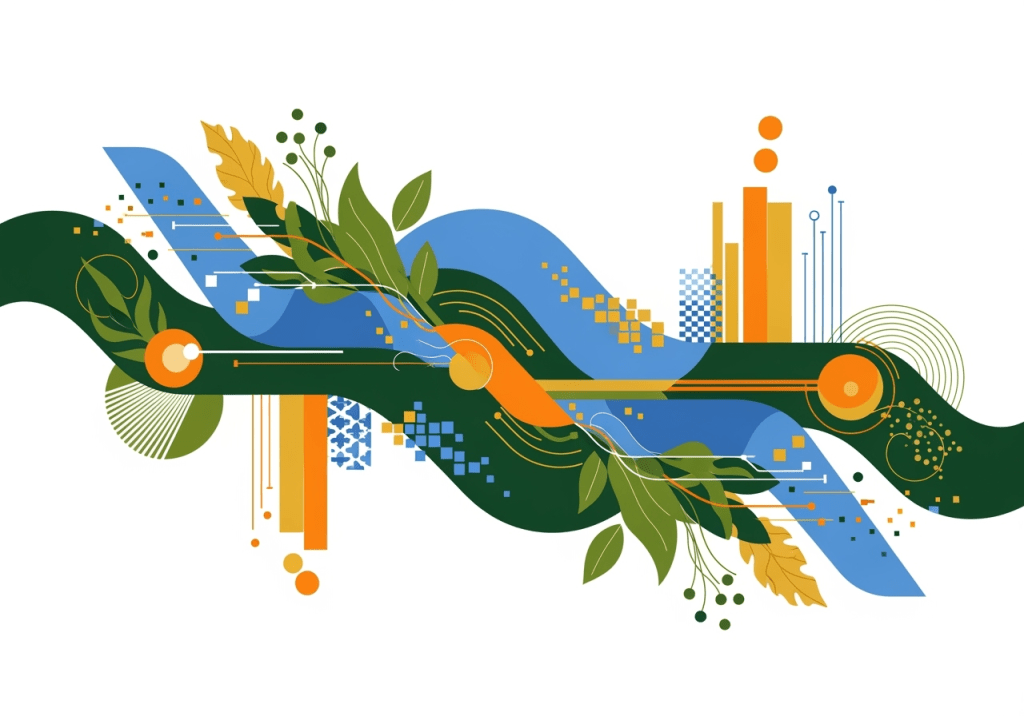
As a Polish-British artist based in Southend-on-Sea, I’ve always been fascinated by the hidden geometric patterns that nature reveals to those who look closely. In this article, I’ll share my journey of transforming organic forms into contemporary geometric abstractions, a technique that has become central to my artistic practice in 2025.
The Evolution of Natural Abstraction Nature has always been a profound source of inspiration for artists, but our contemporary approach to geometric abstraction offers a fresh perspective on these timeless elements. As we move through 2025, the art world is embracing a fusion of organic shapes and geometric precision, creating works that speak to both our connection with nature and our modern aesthetic sensibilities.
My Approach to Geometric Nature Art When I look at a dandelion or a forget-me-not in my garden, I don’t just see the flower – I see circles, triangles, and lines waiting to be discovered. My process involves:
- Observation and Simplification
- Starting with careful observation of natural forms
- Identifying basic geometric shapes within organic structures
- Reducing complex natural elements to their essential geometric components
- The Geometric Translation
- Converting organic curves into clean lines and shapes
- Using my signature style of combining Art Nouveau influences with contemporary minimalism
- Incorporating bold contrasts and graphic elements
- Color and Composition
- Working with seasonal color palettes
- Using geometric grids to create balanced compositions
- Implementing high-contrast combinations for visual impact
Practical Applications in My Work My recent pieces demonstrate this approach:
- The “Secret Guardian” series: Transforming flowing poppy petals into bold geometric patterns
- “Sunlit Sanctuary“: Converting organic leaf shapes into angular, contemporary forms
- Spring 2025 Collection: Interpreting dandelions through geometric abstraction
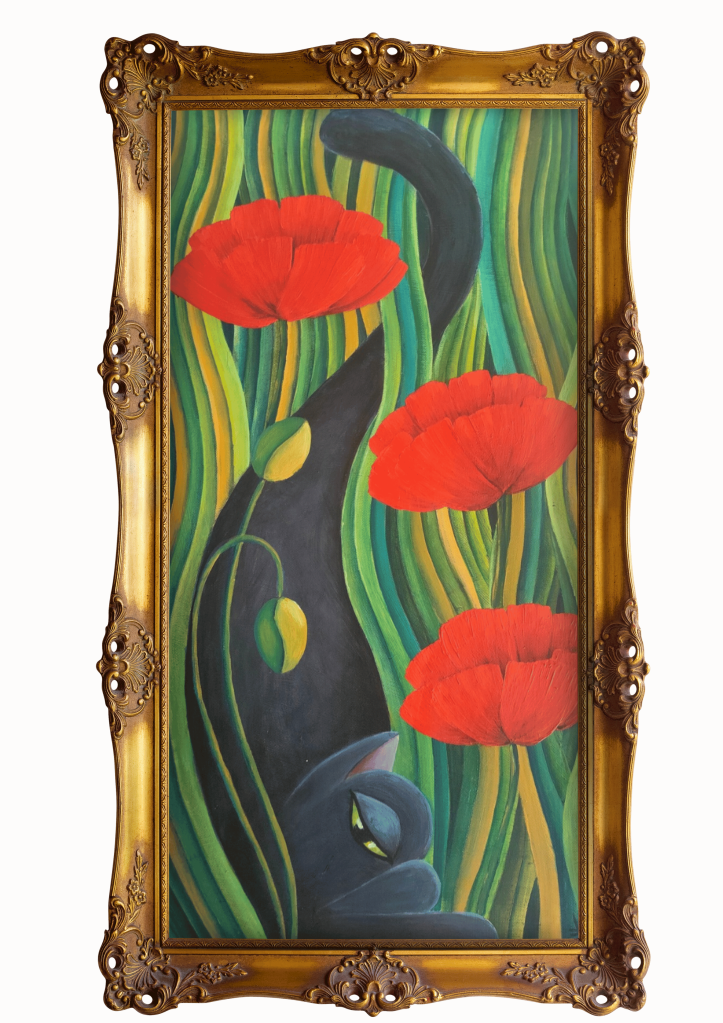
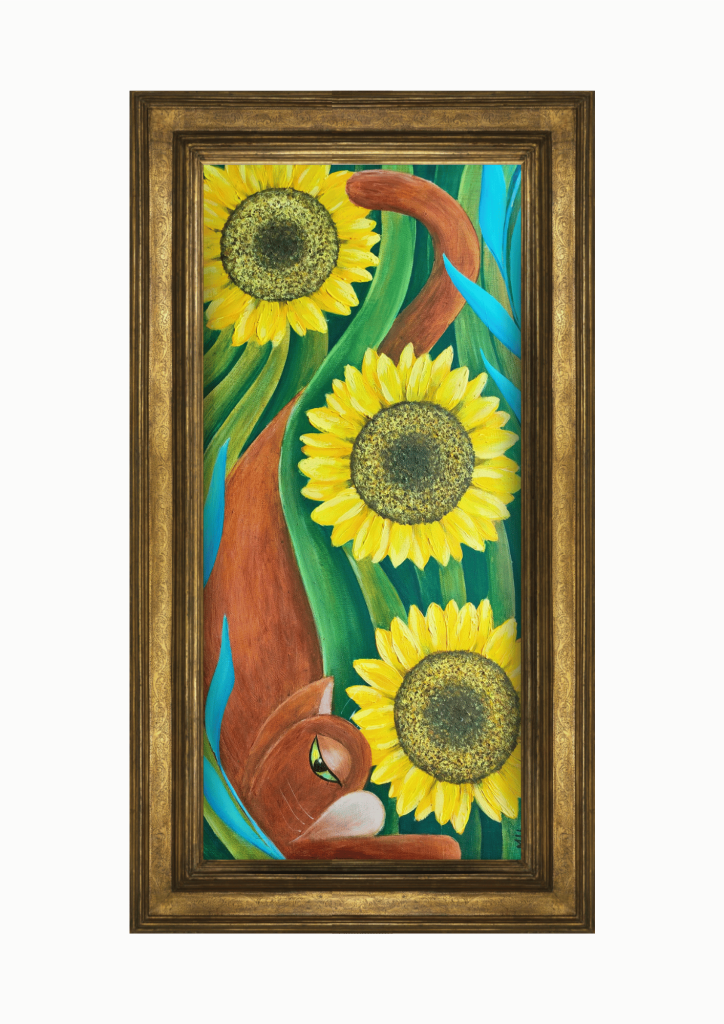
Technical Considerations When creating geometric nature art, consider:
- The balance between organic and geometric elements
- The use of negative space to enhance geometric patterns
- The role of color in defining geometric shapes
- The importance of precision in execution
The Contemporary Context In 2025, geometric abstraction of nature has evolved to embrace:
- Minimalist approaches to natural forms
- Sustainable and eco-friendly materials and techniques
- Digital integration with traditional methods
- Bold, contemporary color palettes
Looking Forward As we continue through 2025, this approach to geometric nature art offers endless possibilities for creative expression. Whether you’re working on miniature pieces or larger compositions, the key is finding the perfect balance between nature’s organic beauty and geometric precision.
- Behind-the-scenes of Artwork Creation
- History of Art
- Local Art Scene in Southend-on-Sea
- Nature and Cat Art Technics
- Navigating Social Media & AI in Art in 2025
- Seasonal Reflections
- Thoughts on AI Art, Traditional Art, and Creativity
- Uncategorized



 Milena Skulimowska Visual Artist
Leave a comment