
Second article in the “Finding Geometry in Nature” series
As a Polish-British artist based in Southend-on-Sea, I’ve spent years developing my unique approach to abstracting botanical elements. In this second article of our series, I’ll share my techniques for transforming familiar flora into contemporary geometric art pieces that capture the essence while creating something entirely new.
The Essence of Botanical Abstraction
When I look at a dandelion or forget-me-not in the fields around Southend, I don’t just see the flower—I see potential for geometric interpretation. The process of botanical abstraction involves:
- Observation and Deconstruction
- Studying the natural structure of plants
- Identifying core geometric shapes within organic forms
- Noting how light interacts with different parts of the plant
- Geometric Translation
- Converting organic curves into defined lines and shapes
- Simplifying complex structures while maintaining recognizable elements
- Finding the balance between abstraction and representation
My Technique: From Observation to Creation
Step 1: Field Studies
I begin with observational sketches of local British flora, focusing on structural elements rather than realistic rendering. For my Spring 2025 collection featuring dandelions and forget-me-nots, I spent hours studying how these plants grow, move, and interact with their environment.
Step 2: Geometric Breakdown
Next comes the analytical phase—breaking down organic forms into basic geometric shapes:
- Dandelion seed heads become perfect circles with radiating triangular patterns
- Forget-me-not petals transform into pentagon arrangements
- Stems become clean, deliberate lines rather than organic curves
Step 3: Compositional Planning
The arrangement of these geometric elements follows principles of:
- Balance and asymmetry
- Negative space utilization
- Pattern repetition and variation
- Color blocking for visual impact
Step 4: Color Theory Application
My signature approach to color in botanical abstractions involves:
- Limiting palettes to 3-5 colors per piece
- Using high contrast for visual impact
- Employing unexpected color combinations that still evoke the original plant
- Creating seasonal variations of the same geometric structure
Case Study: The Dandelion Series
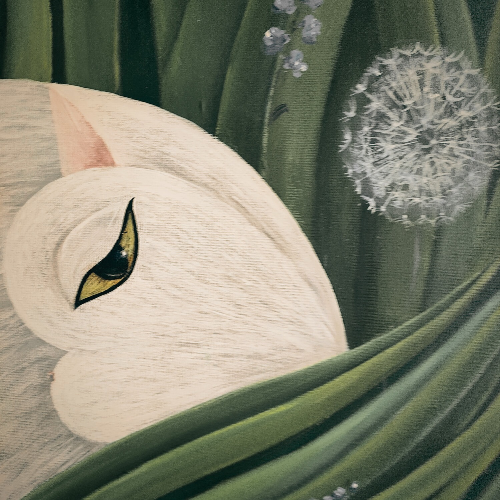
My recent “White Cat with Dandelions” collection demonstrates this process perfectly. What began as field sketches of common dandelions transformed into:
- Geometric interpretations of both bloom and seed head stages
- Clean, precise circular forms with radiating elements
- A spring palette that evokes the season without literal representation
- The juxtaposition of geometric cat forms against botanical elements
Technical Considerations
When creating your own abstract botanical art, consider:
- Medium selection: Acrylic offers clean edges ideal for geometric work
- Tool choices: Using masking techniques for precise geometric edges
- Surface preparation: How texture affects geometric precision
- Scale variation: How the same geometric pattern changes at different sizes
Contemporary Context
In 2025, botanical abstraction has evolved to embrace:
- Minimalist approaches that reduce plants to their most essential forms
- Bold geometric interpretations that maintain botanical recognition
- The fusion of traditional Art Nouveau influences with contemporary minimalism
- Sustainable approaches to materials and subjects
Looking Forward
As we continue exploring geometric approaches to nature, the next article will examine how seasonal changes influence abstract interpretations and how to create cohesive collections that capture the essence of British flora throughout the year.
What elements of your local environment might you transform through geometric abstraction? The possibilities are endless when you begin to see the hidden geometry in every petal and leaf.
- Behind-the-scenes of Artwork Creation
- History of Art
- Local Art Scene in Southend-on-Sea
- Nature and Cat Art Technics
- Navigating Social Media & AI in Art in 2025
- Seasonal Reflections
- Thoughts on AI Art, Traditional Art, and Creativity
- Uncategorized





 Milena Skulimowska Visual Artist
Leave a comment