
Fifth article in the “Finding Geometry in Nature” series
As a Polish-British artist working from my Southend-on-Sea studio, I’ve discovered that incorporating mixed media techniques into geometric nature art opens up extraordinary creative possibilities while maintaining the clean, structured aesthetic that defines contemporary work. In this article, I’ll share my approach to expanding beyond traditional acrylic painting while preserving the geometric clarity that makes nature abstractions so compelling.
The 2025 Mixed Media Landscape
The art world in 2025 is embracing mixed media with unprecedented enthusiasm. Current trends show:
- Oversized abstracts with bold geometry and vibrant brushstrokes
- Textural experimentation combining traditional and digital elements
- Sustainable materials reflecting environmental consciousness
- AI and augmented reality integration creating immersive experiences
For geometric nature artists, this presents unique opportunities to enhance botanical abstractions while maintaining contemporary appeal.
My Mixed Media Philosophy
Maintaining Geometric Integrity
The challenge with mixed media in geometric nature art is preserving the clean lines and structured compositions that define the style. My approach focuses on:
Strategic Material Selection:
- Materials that enhance rather than overwhelm geometric patterns
- Textures that complement natural forms without losing abstraction
- Elements that maintain the sophisticated simplicity collectors expect
Controlled Integration:
- Using mixed media to accentuate specific areas rather than covering entire compositions
- Maintaining clear geometric boundaries between different materials
- Ensuring each medium serves the overall compositional structure
Core Mixed Media Techniques for Geometric Nature Art
Acrylic Foundation with Strategic Additions
Base Layer Strategy: Working with acrylic as the primary medium provides the clean, precise foundation essential for geometric nature art. This allows for:
- Sharp geometric edges and clean color blocks
- Consistent color saturation across botanical elements
- Reliable drying times for layered work
Enhancement Techniques:
- Metallic accents for winter light effects (gold leaf on birch bark textures)
- Textural pastes for organic elements like tree bark or seed head details
- Collage elements using natural papers for subtle background textures
Paper Integration for Botanical Elements
Natural Paper Collage: Incorporating handmade or textured papers can enhance botanical abstractions:
- Tissue paper layers for delicate petal effects in geometric flower forms
- Textured papers for bark patterns in stylized tree compositions
- Vintage botanical prints as subtle background elements in contemporary pieces
Application Techniques:
- Use papers sparingly to maintain geometric clarity
- Integrate papers within defined geometric shapes rather than organic forms
- Ensure paper elements complement rather than compete with painted areas
Textural Elements for Natural Forms
Controlled Texture Application: Adding texture to specific geometric areas can enhance the natural connection:
- Sand or pumice gel for rough bark textures within geometric tree forms
- Modeling paste for raised seed head details in dandelion abstractions
- Fabric elements for soft contrast against hard geometric edges
Technical Considerations:
- Apply textures within clearly defined geometric boundaries
- Use neutral or monochromatic textures to avoid color competition
- Ensure textural elements enhance rather than distract from color relationships
Seasonal Mixed Media Applications
Spring Collections: Delicate Layering
Technique Focus: Transparent layering and delicate additions
- Tissue paper overlays for soft petal effects in geometric flower forms
- Watercolor pencil details for fine botanical line work
- Iridescent mediums for morning dew effects on geometric leaves
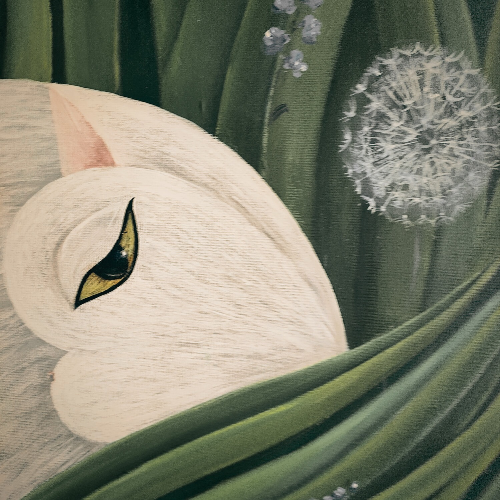
Case Study: “White Cat with Dandelions” Enhancement: Adding subtle metallic highlights to dandelion seed heads using gold leaf creates sophisticated light effects while maintaining the piece’s geometric integrity.
Summer Collections: Bold Contrasts
Technique Focus: High-impact textural contrasts
- Heavy body acrylics combined with smooth glazes for poppy petals
- Collage elements using vibrant papers within geometric leaf patterns
- Metallic paints for sunlight effects on geometric botanical forms
Autumn Collections: Rich Layering
Technique Focus: Complex textural relationships
- Multiple paper layers for fallen leaf effects in geometric compositions
- Earth-tone pastels over acrylic bases for atmospheric depth
- Natural elements like pressed leaves integrated into geometric patterns
Winter Collections: Minimalist Enhancement
Technique Focus: Subtle, sophisticated additions
- Metallic leaf for birch bark textures in geometric tree forms
- Charcoal details for fine line work in geometric branch patterns
- Matte and gloss medium contrasts for snow and shadow effects
Technical Considerations for Mixed Media Success
Adhesion and Longevity
Material Compatibility:
- Test all materials together before applying to finished pieces
- Use appropriate primers and mediums for permanent adhesion
- Document successful material combinations for future reference
Archival Quality:
- Choose acid-free papers and archival adhesives
- Use lightfast materials for long-term color stability
- Consider UV protection for pieces with sensitive materials
Maintaining Professional Standards
Clean Execution:
- Plan mixed media elements during the design phase
- Use masking techniques for precise material placement
- Maintain clean edges between different media
Documentation:
- Photograph process stages for social media content
- Record material lists and techniques for reproduction
- Create process videos for TikTok and Instagram content
Contemporary Market Considerations
Collector Preferences in 2025
Sophisticated Simplicity: Today’s collectors appreciate mixed media work that enhances rather than overwhelms the core artistic vision. Key preferences include:
- Subtle integration of materials rather than obvious mixed media effects
- High-quality materials that age well and maintain value
- Contemporary relevance while respecting traditional craftsmanship
Pricing Mixed Media Work
Value Considerations:
- Factor in additional material costs and time investment
- Highlight unique techniques in marketing materials
- Emphasize the handcrafted, artisanal quality that mixed media provides
Digital Integration: The 2025 Advantage
Planning and Visualization
Digital Sketching:
- Use digital tools to plan mixed media placement before application
- Test color and texture combinations virtually
- Create detailed process documentation for social media
Documentation and Marketing:
- Photograph mixed media details for close-up social media content
- Create time-lapse videos of mixed media application processes
- Develop educational content about mixed media techniques
Troubleshooting Common Mixed Media Challenges
Maintaining Geometric Clarity
Problem: Mixed media elements disrupting clean geometric lines Solution:
- Use templates and masking for precise material placement
- Apply mixed media within defined geometric boundaries
- Maintain strong value contrasts between geometric areas
Material Integration Issues
Problem: Different materials appearing disconnected or competing Solution:
- Establish a dominant medium (usually acrylic) as the foundation
- Use mixed media elements to enhance specific focal points
- Maintain consistent color relationships across all materials
Overcomplication
Problem: Too many materials creating visual chaos Solution:
- Limit mixed media additions to 2-3 complementary materials per piece
- Focus on enhancing existing geometric elements rather than adding new ones
- Remember that restraint often creates more sophisticated results
Looking Forward: Future Possibilities
As we continue exploring geometric nature art, the next article will examine how to effectively photograph and document mixed media work for digital platforms, ensuring your sophisticated techniques translate beautifully across social media and online sales platforms.
The key to successful mixed media in geometric nature art lies in thoughtful restraint—each additional material should serve the overall vision while maintaining the clean, contemporary aesthetic that defines this artistic approach.
Mixed media techniques offer endless possibilities for enhancing geometric nature abstractions, but the most successful pieces maintain the essential balance between natural inspiration, geometric structure, and contemporary sophistication that collectors seek.
Call to Action: What mixed media techniques interest you most for your geometric nature work? Share your experiments in the comments below, and don’t forget to follow for more insights into contemporary mixed media applications.
- Behind-the-scenes of Artwork Creation
- History of Art
- Local Art Scene in Southend-on-Sea
- Nature and Cat Art Technics
- Navigating Social Media & AI in Art in 2025
- Seasonal Reflections
- Thoughts on AI Art, Traditional Art, and Creativity
- Uncategorized


 Milena Skulimowska Visual Artist
Leave a comment