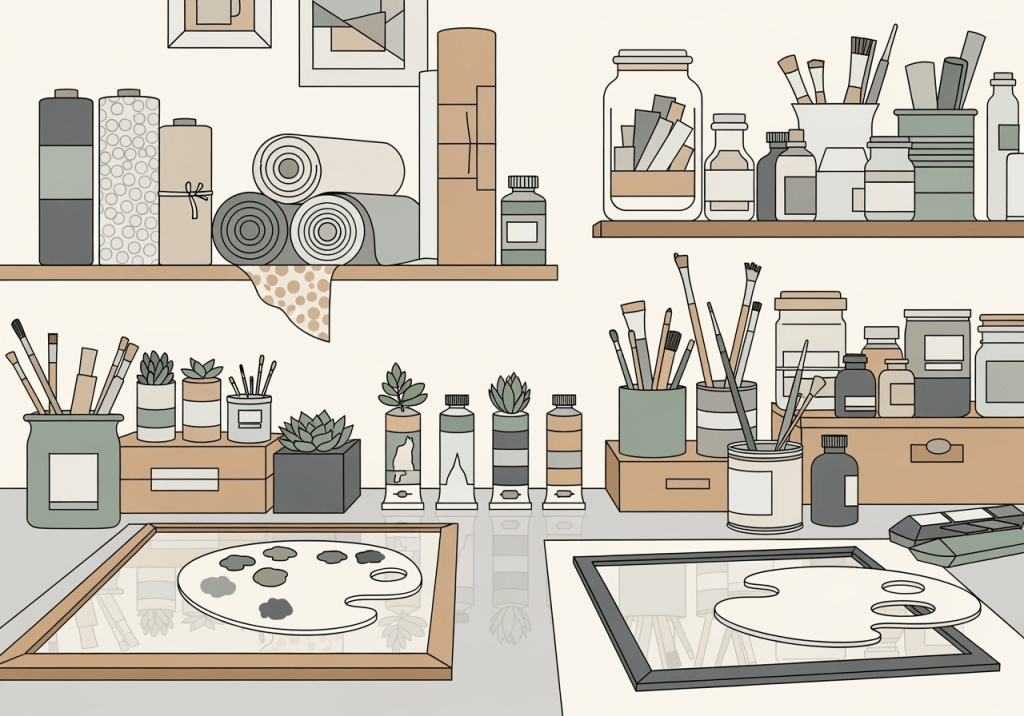
Three weeks into my sustainable art journey, my Southend studio is starting to look dramatically different. Gone are the overflowing bins of paint-covered paper towels and empty tubes. In their place? A carefully organized system of reusable materials, repurposed containers, and creative solutions that have actually enhanced my artistic process.
Today, I’m sharing the practical strategies that have transformed my workspace from a waste-generating machine into a nearly zero-waste creative haven. The best part? Many of these changes have saved me money while opening up entirely new creative possibilities.
The Great Studio Audit
Before implementing any changes, I spent a week documenting exactly what waste my studio produced. The results were eye-opening:
Daily Waste Breakdown:
- Paint-covered disposables: 60% of total waste
- Packaging materials: 25%
- Failed experiments and test pieces: 10%
- General studio debris: 5%
Armed with this data, I knew exactly where to focus my zero-waste efforts. The goal wasn’t perfection overnight – it was systematic reduction and creative reuse.
Paint Tube Renaissance: From Trash to Treasure
Empty paint tubes were my biggest challenge. As someone who works primarily in acrylics for my geometric nature series, I go through quite a few tubes each month. Instead of tossing them, I discovered they’re incredibly versatile:
Paint Tube Upcycling Ideas:
- Miniature planters for studio succulents (perfect drainage holes already exist!)
- Custom color mixing containers for small batches of paint
- Storage for small items like paper clips, push pins, and tiny brushes
- Texture tools – the crimped ends create interesting patterns in wet paint
I’ve even started incorporating empty tubes directly into mixed media pieces. There’s something poetic about using the containers that held the paint as part of the artwork itself.
The Palette Revolution
Disposable paper palettes were consuming ridiculous amounts of paper in my studio. My solution? A collection of repurposed materials that work even better:
Glass Palette Alternatives:
- Old picture frames with white paper backing (easily cleanable)
- Ceramic tiles from local renovation projects
- Acrylic sheets cut from packaging materials
- Freezer paper (reusable multiple times before composting)
The glass surfaces actually help me see colors more accurately than paper palettes ever did. Plus, cleaning them has become a meditative part of my studio routine.
Packaging Magic: Southend Beach Inspiration
Living in Southend-on-Sea means I’m constantly aware of packaging waste washing up on our shores. This awareness pushed me to completely rethink how I package artwork for shipping.
Sustainable Packaging Solutions:
- Seed paper for small prints (customers can plant it!)
- Repurposed cardboard from local businesses
- Fabric wraps instead of bubble wrap (customers love keeping them)
- Biodegradable packing peanuts made from cornstarch
- Local newspaper for padding (supporting community journalism too)
The feedback from Etsy customers has been overwhelmingly positive. Many mention the thoughtful packaging in their reviews, and several have shared photos of the flowers growing from the seed paper wrapping.
Creative Waste Streams: When Mistakes Become Materials
Not every painting works out. Previously, failed experiments went straight in the bin. Now, they’ve become valuable resources:
Repurposing “Failed” Artwork:
- Collage elements for mixed media pieces
- Texture studies for future reference
- Gift wrap for small items (friends love receiving packages wrapped in original art)
- Studio decoration (even imperfect art brightens the space)
- Teaching materials for workshops
One of my favorite recent pieces actually incorporates strips from three “failed” cat portraits. The geometric patterns created by cutting and rearranging the original paintings resulted in something far more interesting than any of the individual pieces.
Unexpected Creative Benefits
The most surprising outcome of going zero waste? It’s actually enhanced my creativity. Constraints often spark innovation, and having to think creatively about materials has pushed my work in new directions.
Creative Discoveries:
- Texture experiments using unconventional tools
- Color mixing innovations from working with limited palettes
- Compositional breakthroughs from repurposing existing elements
- New techniques developed from material limitations
The Numbers: Cost and Environmental Impact
After three months of zero-waste practices, the results speak for themselves:
Studio Waste Reduction:
- 85% reduction in general waste
- 90% reduction in non-recyclable materials
- 70% reduction in packaging costs
- 60% reduction in supply purchases (through reuse and community sharing)
Financial Impact:
- Monthly supply costs down 40%
- Packaging costs reduced by 55%
- New revenue stream from upcycled art pieces
- Increased customer satisfaction and repeat purchases
Challenges and Solutions
Not everything has been smooth sailing. Here are the main challenges I’ve encountered and how I’ve addressed them:
Time Investment: Initially, cleaning and organizing reusable materials took significant time. Solution: I now incorporate this into my studio routine as a mindful transition between creative sessions.
Storage Space: Keeping materials for reuse requires organization. Solution: I invested in a modular storage system using repurposed containers and clear labeling.
Quality Concerns: Some reused materials don’t perform identically to new supplies. Solution: I’ve learned to embrace these variations as creative opportunities rather than limitations.
Practical Tips for Getting Started
Ready to reduce waste in your own creative practice? Start small:
Week 1: Audit your waste streams Week 2: Replace one disposable item with a reusable alternative Week 3: Set up a basic material reuse system Week 4: Connect with other local artists for material sharing
Remember, this isn’t about perfection – it’s about progress and creativity within constraints.
What’s Next
Next week, I’ll be diving into the digital side of sustainable art – exploring how our online practices impact the environment and sharing strategies for eco-friendly digital art creation and marketing.
The zero-waste journey has taught me that sustainability isn’t about limitation – it’s about innovation, community, and discovering new possibilities within thoughtful constraints. Every empty paint tube has become a creative challenge, every “failed” painting a new opportunity.
Have you tried any zero-waste practices in your creative work? I’d love to hear about your experiments and discoveries in the comments below!
- Behind-the-scenes of Artwork Creation
- History of Art
- Local Art Scene in Southend-on-Sea
- Nature and Cat Art Technics
- Navigating Social Media & AI in Art in 2025
- Seasonal Reflections
- Thoughts on AI Art, Traditional Art, and Creativity
- Uncategorized


 Milena Skulimowska Visual Artist
Leave a comment