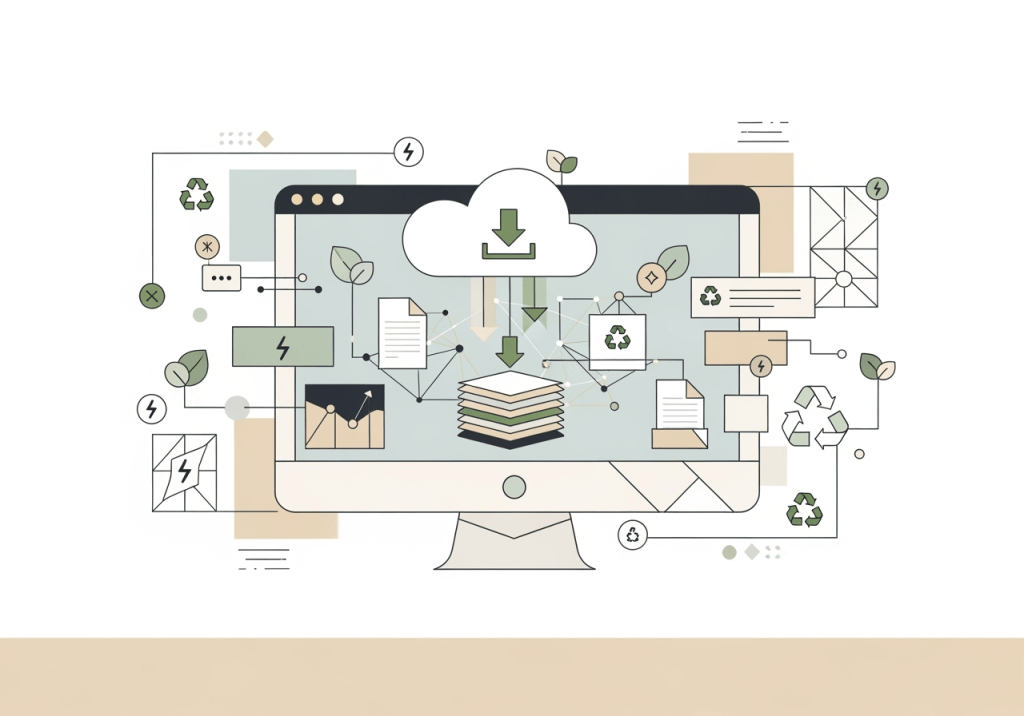
When I first started expanding my Southend art practice into digital downloads and online platforms, I thought I was automatically making an eco-friendly choice. No physical materials, no shipping, no waste – surely digital art was the ultimate sustainable medium?
Three months into my sustainability journey, I’ve discovered the reality is far more complex. The digital art world has its own environmental footprint, and as artists increasingly move online, we need to understand and address these hidden impacts.
The Hidden Carbon Footprint of Digital Art
Every pixel we create, every file we store, and every download we deliver requires energy. The numbers are sobering:
Digital Art’s Environmental Impact:
- Data centers consume 1% of global electricity
- Streaming and downloads generate 4% of global CO2 emissions
- Cloud storage doubles energy consumption every four years
- High-resolution file transfers can equal the carbon footprint of a short car journey
As someone who’s built a digital art business on Etsy and is expanding to platforms like Creative Market, these statistics hit close to home. My digital downloads might seem environmentally neutral, but they’re part of a much larger energy ecosystem.
Rethinking File Sizes and Quality
The first area I tackled was file optimization. My initial approach was “bigger is better” – offering massive, print-ready files to give customers maximum value. But I realized I was prioritizing perceived value over actual environmental impact.
Smart File Management:
- Optimized compression without quality loss
- Multiple size options so customers download only what they need
- Vector formats where possible (smaller files, infinite scalability)
- Progressive JPEGs for faster loading and lower energy consumption
For my geometric nature series, I now offer three file sizes: web-optimized (for social media), standard print (A4/Letter), and large format (for those who specifically need it). Most customers choose the smaller options, significantly reducing the collective carbon footprint of my downloads.
Sustainable Cloud Storage Strategies
My digital art business generates terabytes of data annually – original files, variations, customer downloads, and backups. Previously, I stored everything in multiple cloud locations “just in case.” Now I’m much more strategic:
Eco-Conscious Storage Approach:
- Green hosting providers powered by renewable energy
- Local storage for active projects
- Selective cloud backup of only essential files
- Regular file audits to remove unnecessary duplicates
- Compressed archives for long-term storage
I switched to a hosting provider that runs entirely on renewable energy and consolidated my storage across fewer platforms. The monthly cost actually decreased while reducing my environmental impact.
The Print-on-Demand Balance
Print-on-demand seemed like the perfect sustainable solution – no inventory waste, no overproduction, printing only when ordered. But my research revealed a more nuanced picture:
POD Environmental Considerations:
- Shipping distances from production facilities
- Packaging materials used by POD companies
- Print quality vs. longevity trade-offs
- Customer return rates due to quality issues
I now partner with POD companies based on their environmental policies, not just profit margins. My current partners use water-based inks, sustainable packaging, and have production facilities closer to major customer bases.
Digital Marketing with Environmental Consciousness
Social media marketing is essential for digital art sales, but it also contributes to the digital carbon footprint. I’ve developed strategies that balance reach with responsibility:
Sustainable Digital Marketing:
- Quality over quantity in social media posts
- Optimized image sizes for each platform
- Batch content creation to reduce energy-intensive editing sessions
- Strategic posting times to maximize engagement per post
- Community building over constant content creation
Instead of posting daily across all platforms, I focus on creating higher-quality content less frequently. Engagement rates have actually improved, and my time investment is more sustainable too.
The Southend Digital Art Community
One unexpected benefit of focusing on digital sustainability has been connecting with other environmentally conscious creators in the Southend area. We’ve formed an informal network sharing resources and strategies:
Local Digital Sustainability Initiatives:
- Shared high-end equipment for scanning and photography
- Group workshops on sustainable digital practices
- Collaborative cloud storage for community resources
- Joint marketing efforts to reduce individual digital footprints
This community approach has reduced individual environmental impacts while strengthening our local creative economy.
Customer Education and Transparency
I’ve started being transparent with customers about the environmental considerations of digital art. Rather than deterring purchases, this honesty has actually increased customer loyalty:
Transparency Strategies:
- Carbon footprint information in product descriptions
- Sustainability tips included with downloads
- Eco-friendly printing recommendations for customers
- Local printing partner suggestions to reduce shipping
Customers appreciate understanding the full impact of their purchases and often share their own sustainable printing solutions.
The Economics of Digital Sustainability
Sustainable digital practices often align with good business sense:
Cost-Benefit Analysis:
- Reduced storage costs through efficient file management
- Lower bandwidth costs with optimized files
- Improved customer satisfaction with faster downloads
- Enhanced brand reputation among environmentally conscious buyers
- Reduced equipment wear through strategic usage
My monthly digital infrastructure costs have decreased by 30% while customer satisfaction scores have improved.
Tools and Technologies for Sustainable Digital Art
I’ve discovered several tools that help minimize the environmental impact of digital art creation:
Eco-Friendly Digital Tools:
- Energy-efficient software that uses less processing power
- Batch processing tools to reduce computer runtime
- Cloud services powered by renewable energy
- Compression software that maintains quality while reducing file sizes
- Analytics tools to optimize posting times and reduce waste
Many of these tools are free or low-cost, making sustainable practices accessible regardless of budget.
The Future of Sustainable Digital Art
The digital art world is evolving rapidly, with new technologies offering both opportunities and challenges for sustainability:
Emerging Considerations:
- NFTs and blockchain energy consumption
- AI art generation computational requirements
- Virtual reality and immersive art experiences
- Augmented reality applications for art viewing
- 5G and increased data speeds encouraging larger files
As these technologies develop, artists need to stay informed about their environmental implications and make conscious choices about adoption.
Practical Steps for Digital Sustainability
Ready to reduce your digital art footprint? Start with these actionable steps:
Week 1: Audit your current digital storage and file sizes Week 2: Research and switch to a green hosting provider Week 3: Optimize your most popular digital products Week 4: Implement sustainable social media practices
Remember, small changes across many artists can create significant collective impact.
Measuring Impact and Progress
I now track several metrics to monitor my digital sustainability progress:
Key Performance Indicators:
- Average file size of new digital products
- Storage usage across all platforms
- Energy consumption of digital activities
- Customer feedback on download speeds and quality
- Carbon footprint estimates for digital operations
These metrics help me make data-driven decisions about digital sustainability improvements.
What’s Next
Next week, I’ll be exploring how to build a local network of sustainable art suppliers and create community-based solutions for eco-friendly art practices in Southend-on-Sea.
The digital art world offers incredible opportunities for sustainable creativity, but only if we approach it consciously. By optimizing our digital practices, we can reduce environmental impact while often improving our business operations and customer experience.
How do you balance digital convenience with environmental responsibility in your creative practice? Share your strategies in the comments below! Love to hear about your experiments and discoveries in the comments below!
- Behind-the-scenes of Artwork Creation
- History of Art
- Local Art Scene in Southend-on-Sea
- Nature and Cat Art Technics
- Navigating Social Media & AI in Art in 2025
- Seasonal Reflections
- Thoughts on AI Art, Traditional Art, and Creativity
- Uncategorized



 Milena Skulimowska Visual Artist
Leave a comment