
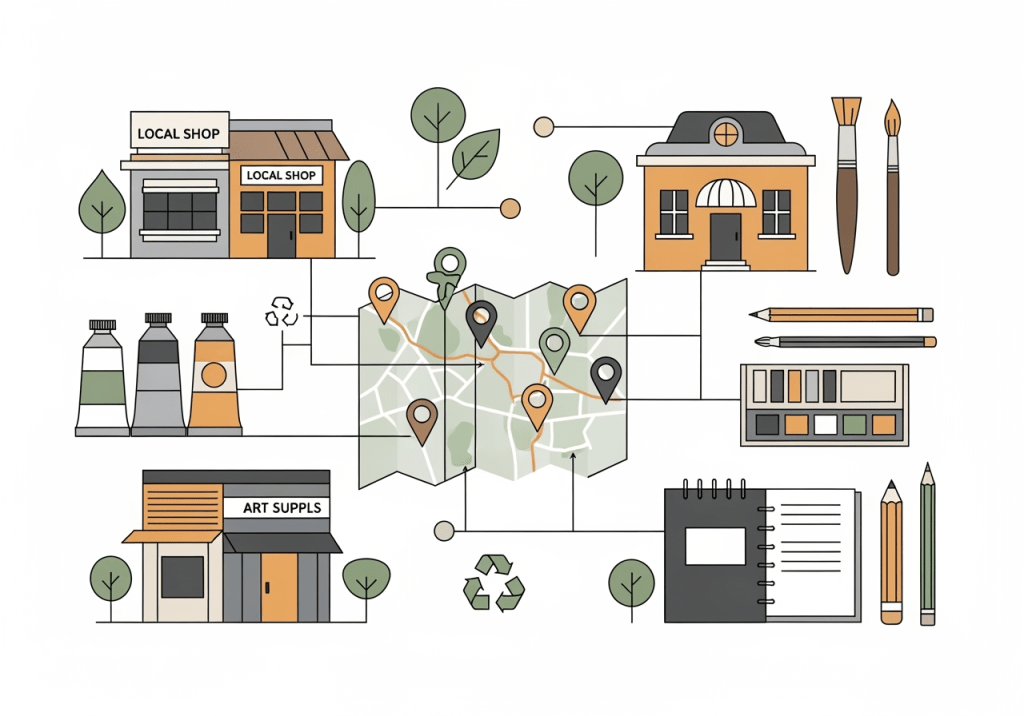
Four months into my sustainable art journey, I’ve learned that the most impactful changes often happen at the community level. While switching to eco-friendly materials in my Southend studio was important, building a network of local suppliers and like-minded artists has created something far more powerful – a sustainable creative ecosystem that benefits everyone involved.
Today, I’m sharing how I’ve mapped and developed relationships with sustainable art suppliers, created collaborative buying groups, and helped establish what’s becoming a thriving network of environmentally conscious creators across Essex.
The Great Southend Supply Hunt
My quest for local sustainable suppliers began with a simple goal: reduce the carbon footprint of shipping art materials from distant warehouses. What I discovered was a rich network of businesses and suppliers I never knew existed, many within cycling distance of my studio.
Local Discovery Process:
- Independent art shops with sustainable product lines
- Reclamation yards offering unique materials for mixed media work
- Local framers using FSC-certified wood and eco-friendly finishes
- Print shops with vegetable-based inks and recycled papers
- Specialty suppliers for natural pigments and traditional materials
The search itself became an adventure, connecting me more deeply with Southend’s creative community and local business ecosystem.
Building Supplier Relationships
Working with local suppliers requires a different approach than ordering online. It’s about building relationships, understanding their values, and often educating each other about sustainable practices.
Key Relationship Strategies:
- Regular communication about new sustainable products
- Bulk ordering coordination with other local artists
- Feedback sharing on product performance and environmental impact
- Collaborative problem-solving for unique material needs
- Cross-promotion supporting their businesses through social media
Mapping the Essex Creative Supply Chain
Understanding our regional supply chain has revealed surprising opportunities for sustainable sourcing:
Local Material Sources:
- Reclaimed wood from Southend Pier restoration projects
- Natural pigments from Essex clay deposits
- Recycled papers from local printing businesses
- Fabric scraps from Southend’s fashion design students
- Beach materials ethically collected during cleanup events
This mapping exercise has created a resource that benefits the entire local art community. We maintain a shared database of suppliers, complete with sustainability ratings and artist reviews.
Supporting Values-Aligned Businesses
Not all local suppliers prioritize sustainability, but many are willing to evolve when they see consistent demand from the creative community. I’ve learned to identify and support businesses that share environmental values.
Evaluation Criteria:
- Environmental policies and certifications
- Local sourcing of their own materials
- Waste reduction practices in their operations
- Community involvement in environmental initiatives
- Transparency about supply chain and manufacturing
Supporting these businesses isn’t just about purchasing – it’s about building long-term partnerships that strengthen the entire sustainable creative ecosystem.
The Economics of Local Sourcing
Initially, I worried that local sourcing would significantly increase costs. The reality has been more nuanced:
Cost Analysis After 6 Months:
- Individual purchases: 15-20% higher than online retailers
- Hidden savings: Reduced storage needs, better product advice, fewer returns
The slight premium for local sourcing has been offset by improved product quality, reduced waste, and the intangible benefits of community relationships.
Digital Tools for Local Sourcing
Technology has been crucial in organizing and optimizing our local supply network:
Essential Digital Tools:
- Shared spreadsheets tracking suppliers and pricing
- Google Maps marking sustainable suppliers across Essex
- Calendar apps scheduling collective pickup days
- Social media groups sharing sourcing tips and opportunities
These tools have made coordination effortless and helped our network scale beyond what any individual could manage.
Challenges and Creative Solutions
Local sourcing isn’t without challenges. Here’s how we’ve addressed common issues:
Limited Selection: We’ve worked with suppliers to expand their sustainable ranges and connected with specialty suppliers for unique needs.
Inconsistent Availability: We’ve learned to be flexible with materials and see limitations as creative opportunities rather than obstacles.
Quality Variations: We’ve developed relationships with suppliers who understand our quality requirements and provide consistent products.
Coordination Complexity: We’ve streamlined processes through digital tools and designated coordinators for different material categories.
Future Vision: The Sustainable Creative Commons
Looking ahead, I envision a comprehensive sustainable creative commons for our region – a network of artists, suppliers, educators, and community organizations working together to make sustainable art practices the norm rather than the exception.
Vision Components:
- Material libraries where artists can borrow specialty items
- Skill sharing networks for sustainable techniques
- Collaborative studio spaces with shared sustainable equipment
- Community workshops open to all skill levels
- Policy advocacy for better environmental standards in art supplies
Getting Started in Your Area
Ready to build a sustainable supply network in your community? Start with these steps:
Week 1: Map existing local suppliers and assess their sustainability practices Week 2: Connect with other local artists interested in sustainable practices Week 3: Organize your first group order or supplier visit Week 4: Create systems for ongoing coordination and communication
Remember, building a network takes time, but every connection strengthens the entire community.
The Ripple Effect
The most rewarding aspect of building this network has been watching the ripple effects. Suppliers are stocking more sustainable products, artists are experimenting with new techniques, and the broader community is becoming more aware of environmental issues in creative practices.
Local sourcing has transformed from a personal sustainability goal into a community movement that’s making Southend-on-Sea a more vibrant and environmentally conscious place to create.
What’s Next
Next week, I’ll be sharing the final article in this series: “The Future Canvas: Measuring Impact and Inspiring Change” – where I’ll reveal the complete results of my six-month sustainability journey and outline plans for expanding these practices throughout our creative community.
Have you discovered sustainable suppliers in your area? What challenges have you faced with local sourcing? Share your experiences in the comments below!
- Behind-the-scenes of Artwork Creation
- History of Art
- Local Art Scene in Southend-on-Sea
- Nature and Cat Art Technics
- Navigating Social Media & AI in Art in 2025
- Seasonal Reflections
- Thoughts on AI Art, Traditional Art, and Creativity
- Uncategorized





 Milena Skulimowska Visual Artist
Leave a comment