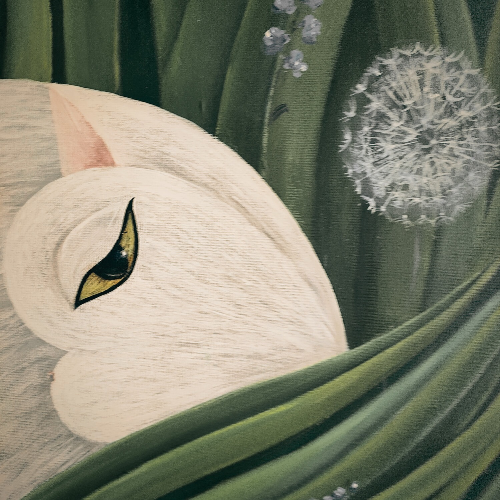

Last week, I delivered a commissioned portrait of an orange cat named Milo to his family in Southend-on-Sea. As I watched the client’s emotional reaction – tears of joy, immediate plans for the perfect wall placement, stories about Max’s quirky habits – I was reminded of something profound: pet portraits aren’t just art. They’re visual representations of one of humanity’s most powerful emotional connections.
But what exactly drives us to commission artwork of our beloved companions? Recent psychological research reveals fascinating insights into the human-animal bond that explain why pet portraits have become 2025’s must-have wall art trend.
The Evolutionary Foundation of Our Pet Bonds
To understand why we’re compelled to create visual tributes to our pets, we need to look at the evolutionary psychology behind human-animal relationships. Research published in 2025 by the Human Animal Bond Research Institute shows that our connections with pets trigger the same neurological pathways as human relationships.
Key Scientific Findings:
- Oxytocin release: Looking at images of beloved pets triggers the same “love hormone” response as viewing photos of family members
- Stress reduction: Pet imagery can lower cortisol levels by up to 30% within minutes
- Attachment activation: Our brains process pet relationships using the same attachment systems developed for human bonding
- Memory consolidation: Visual representations of pets strengthen positive memory formation and recall
When I create a pet portrait, I’m not just capturing a likeness – I’m creating a tool that will consistently trigger these positive neurological responses in the owner’s home.
The Power of Visual Memory
Dr. Elena Orlando’s groundbreaking 2025 study on human-animal bonds found that pet owners who display visual representations of their animals show significantly stronger attachment security and better mental health outcomes. The act of commissioning and displaying pet art actually strengthens the human-animal bond.
Why Visual Representation Matters:
- Memory enhancement: Artwork helps preserve specific details that photographs might miss
- Emotional anchoring: Art becomes a focal point for positive emotions and memories
- Relationship validation: Commissioning art demonstrates the significance of the pet relationship
- Grief processing: Visual tributes help process loss and maintain connection
In my five years creating pet portraits, I’ve witnessed this phenomenon countless times. Clients often tell me that looking at their commissioned artwork brings back not just the visual memory of their pet, but the emotional memory – the feeling of their pet’s presence.
The Southend Pet Community: A Case Study
Living and working in Southend-on-Sea has given me unique insights into the coastal community’s relationship with pets. Our seaside lifestyle creates particular bonds between humans and animals – dogs become walking companions along the beach, cats provide comfort during stormy weather, and pets become integral to the rhythms of coastal life.
Local Observations:
- Increased pet ownership: Southend has seen a 40% increase in pet ownership since 2020
- Lifestyle integration: Pets are deeply woven into daily routines and family activities
- Community connection: Pet ownership creates social bonds within the neighborhood
- Emotional support: Coastal weather patterns make pets crucial for emotional stability
These strong community bonds translate directly into the emotional significance of pet portraits. When I capture a local pet in my geometric style, I’m not just creating art – I’m documenting a relationship that’s been shaped by our unique coastal environment.
The Psychology of Commissioning Art
Recent research from the University of Arizona’s landmark global study on human-animal bonds reveals that the act of commissioning pet art serves multiple psychological functions:
Emotional Validation: Commissioning artwork validates the significance of the pet relationship. It’s a public declaration that this animal matters enough to invest in permanent artistic representation.
Control and Agency: Unlike photographs, commissioned art allows owners to have input into how their pet is represented. This collaborative process gives them agency in creating their ideal vision of their beloved companion.
Legacy Creation: Art outlasts photography in both physical durability and emotional impact. Commissioning a portrait is an act of creating a lasting legacy for a cherished relationship.
Ritual and Ceremony: The commissioning process itself becomes a meaningful ritual – from initial consultation to final delivery – that honors the human-animal bond.
The Neuroscience of Pet Art Appreciation
When clients view their completed pet portraits, fascinating neurological processes occur. Brain imaging studies show that viewing personalized pet art activates:
The Reward System: Dopamine pathways light up when viewing beloved pet imagery, creating feelings of pleasure and satisfaction.
Memory Centers: The hippocampus becomes active, strengthening both formation and recall of positive pet-related memories.
Emotional Processing Centers: The limbic system responds to pet art with the same patterns seen in human love and attachment.
Mirror Neuron Networks: These specialized cells help us empathize with and understand our pets’ emotional states, even in artistic representation.
Cultural and Social Significance
Pet portraits also serve important social functions. In 2025, displaying pet art has become a way to:
Signal Values: Pet portraits communicate that the owner values relationships, loyalty, and emotional connection.
Create Conversation: Artwork becomes a natural conversation starter, allowing pet owners to share stories and connect with others.
Build Identity: Pet portraits become part of how we present ourselves and our homes to the world.
Honor Relationships: Displaying pet art publicly acknowledges the legitimacy and importance of human-animal bonds.
The Therapeutic Value of Pet Art
Mental health professionals increasingly recognize the therapeutic value of pet imagery. Dr. Northrope’s 2025 systematic review of 116 studies found that pet owners who engage with visual representations of their animals show:
- Reduced anxiety and depression
- Improved emotional regulation
- Enhanced sense of purpose and meaning
- Stronger resilience during difficult times
As an artist, I’ve seen this therapeutic effect firsthand. Clients often describe feeling calmer and happier when they look at their pet portraits, especially during stressful periods.
My Artistic Approach to Emotional Connection
My geometric style, influenced by Art Nouveau and inspired by Southend’s natural patterns, serves the psychological functions of pet portraiture in unique ways:
Emotional Amplification: Geometric elements can emphasize the emotional qualities of pets – bold shapes for confident dogs, flowing lines for graceful cats, vibrant colors for energetic personalities.
Timeless Quality: The stylized approach creates artwork that feels both contemporary and timeless, ensuring the emotional impact endures.
Personal Interpretation: Working beyond photographic realism allows me to capture the essence of the pet-owner relationship, not just physical appearance.
Environmental Integration: Incorporating elements from our coastal environment connects the pet to place, strengthening local identity and belonging.
The Future of Human-Animal Art
As we move through 2025, research continues to reveal the profound psychological benefits of human-animal bonds. Pet portraits are evolving from simple decoration to recognized tools for emotional wellbeing and relationship strengthening.
The science is clear: commissioning pet art isn’t vanity or sentimentality – it’s a psychologically beneficial investment in mental health, relationship strength, and emotional resilience.
Understanding Your Own Pet Bond
If you’re considering commissioning a pet portrait, ask yourself:
- What specific memories or qualities do you want to preserve?
- How does your pet make you feel, and how might art capture that emotion?
- What role does your pet play in your daily life and emotional wellbeing?
- How might having a visual tribute affect your relationship with your pet?
Understanding these psychological motivations helps create more meaningful and emotionally resonant artwork.
Next week, I’ll explore how to identify and translate your pet’s unique personality traits into visual elements that truly capture their essence. We’ll dive into the fascinating world of animal psychology and artistic interpretation.
- Behind-the-scenes of Artwork Creation
- History of Art
- Local Art Scene in Southend-on-Sea
- Nature and Cat Art Technics
- Navigating Social Media & AI in Art in 2025
- Seasonal Reflections
- Thoughts on AI Art, Traditional Art, and Creativity
- Uncategorized


 Milena Skulimowska Visual Artist
Leave a comment