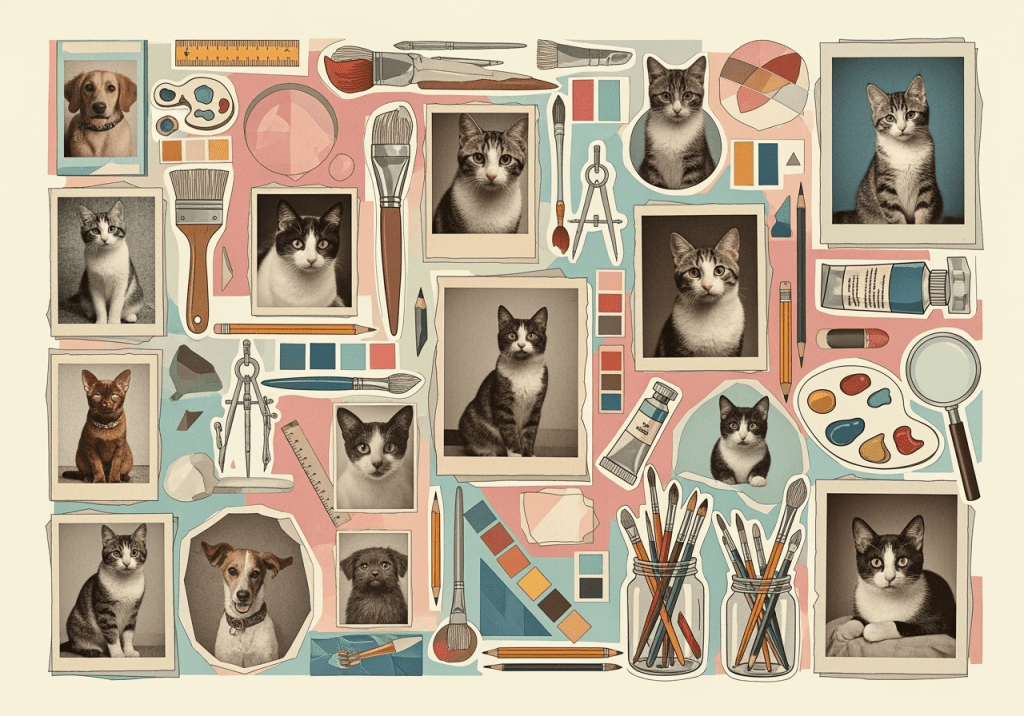
Last month, I received a collection of photos from Emma in Leigh-on-Sea that perfectly illustrates today’s topic. Among dozens of images of her tabby cat, Milo, were blurry action shots, perfectly composed portraits, candid moments, and even a few accidental paw-in-front-of-camera disasters. “I don’t know which ones to choose,” she wrote. “They’re all so different, but they’re all him.”
Emma’s dilemma highlights one of the most fascinating aspects of pet portraiture: how we transform static photographs into dynamic artistic interpretations that capture not just appearance, but essence. Today, I’m exploring the journey from photograph to portrait and how artistic interpretation can reveal the deeper story of the pet-owner relationship.
The Psychology of Photo Selection
The photographs clients choose for their pet portraits reveal as much about the relationship as they do about the pet. Photo selection is rarely about technical quality – it’s about emotional resonance and memory activation.
Common Photo Selection Patterns:
- The “Perfect” Shot: Technically excellent but may lack personality
- The “Candid” Moment: Captures natural behaviour and character
- The “Memory” Photo: Triggers specific emotional associations
- The “Personality” Shot: Shows unique quirks and expressions
- The “Relationship” Image: Includes interaction with owner or environment
Psychological Factors in Photo Choice:
- Recency bias: Preferring recent photos over older, potentially more characteristic ones
- Emotional attachment: Choosing photos linked to happy memories
- Idealisation: Selecting images that show the pet at their “best”
- Authenticity desire: Wanting photos that capture “real” personality
- Grief influence: Memorial commissions often favour peaceful, dignified images
Understanding these patterns helps me guide clients towards photos that will translate effectively into meaningful artwork.
Reading Photographs for Artistic Potential
Not all photographs translate equally well into portraits. After five years of creating pet art in Southend-on-Sea, I’ve developed specific criteria for evaluating photographic source material.
Technical Considerations:
- Image clarity: Sufficient detail to understand form and features
- Lighting quality: Good contrast and dimensional information
- Composition: Workable arrangement of elements
- Resolution: Adequate detail for the intended portrait size
- Colour information: Accurate representation of coat colours and patterns
Emotional Considerations:
- Expression quality: Eyes that convey personality and connection
- Body language: Posture that reflects the pet’s character
- Environmental context: Background elements that enhance the story
- Moment authenticity: Genuine behaviour rather than forced poses
- Relationship evidence: Signs of the bond between pet and owner
Artistic Potential Markers:
- Strong focal points: Clear areas of visual interest
- Dynamic elements: Suggestion of movement or energy
- Geometric possibilities: Shapes and patterns that translate to my style
- Colour harmony: Pleasing palette relationships
- Compositional strength: Balanced arrangement of visual elements
The Art of Combining Multiple References
Rarely does a single photograph capture everything needed for a compelling portrait. The magic often happens when combining elements from multiple images to create a more complete representation.
Strategic Photo Combination Approaches:
- Expression + Posture: Best facial expression from one photo, ideal body position from another
- Detail Enhancement: Close-up shots for specific features, wider shots for overall composition
- Seasonal Integration: Combining pet photos with separate environmental elements
- Age Progression: Blending characteristics from different life stages
- Activity Synthesis: Merging elements that show various aspects of personality
Milo’s Portrait Example: For Emma’s commission, I combined:
- Primary reference: A candid shot showing Milo’s alert, intelligent expression
- Secondary reference: A different photo capturing his elegant sitting posture
- Detail reference: A close-up revealing the subtle patterns in his coat
- Environmental inspiration: Emma’s description of his favourite sunny windowsill
This approach created a portrait that felt more complete and authentic than any single photograph could have achieved.
Interpreting Personality Through Photographic Cues
Photographs capture moments, but portraits must convey ongoing personality. Learning to read personality cues in photographs is essential for successful artistic interpretation.
Facial Expression Analysis:
- Eye engagement: Direct gaze suggests confidence; averted eyes may indicate shyness
- Ear positioning: Alert ears show engagement; relaxed ears suggest contentment
- Mouth and whiskers: Subtle cues about mood and temperament
- Overall tension: Facial relaxation or alertness patterns
Body Language Interpretation:
- Posture confidence: Upright stance versus relaxed positioning
- Tail communication: Position and movement suggesting emotional state
- Paw placement: Deliberate positioning versus casual arrangement
- Space relationship: How the pet positions itself within the environment
Environmental Interaction:
- Territory claiming: How pets position themselves in their space
- Object relationships: Interaction with toys, furniture, or favourite spots
- Human proximity: Comfort level with owner presence in frame
- Seasonal preferences: Indoor versus outdoor positioning patterns
My Geometric Translation Process
Transforming photographic realism into geometric interpretation requires a systematic approach that preserves personality whilst creating artistic coherence.
Step 1: Shape Analysis
- Primary forms: Identifying the basic geometric shapes within the pet’s form
- Secondary patterns: Finding repeating elements and rhythms
- Negative space: Understanding the shapes around and between forms
- Proportional relationships: Maintaining authentic size relationships
Step 2: Pattern Recognition
- Coat patterns: Translating markings into geometric motifs
- Movement lines: Finding the flow and direction within the pose
- Facial geometry: Identifying the underlying structure of features
- Environmental echoes: Connecting pet shapes to background elements
Step 3: Colour Simplification
- Palette reduction: Distilling complex colours into harmonious schemes
- Value relationships: Maintaining light and shadow patterns
- Temperature balance: Preserving warm and cool colour relationships
- Accent placement: Strategic use of contrasting colours for emphasis
Step 4: Compositional Enhancement
- Focus direction: Guiding the viewer’s eye through geometric arrangement
- Balance creation: Distributing visual weight effectively
- Rhythm establishment: Creating movement through repeated elements
- Unity development: Ensuring all elements work together harmoniously
Case Studies: Photo to Portrait Transformations
Let me walk through how I’ve transformed photographs into geometric portraits for recent commissions:
Milo – The Contemplative Tabby:
- Photo challenge: Multiple good options but no single perfect reference
- Solution approach: Combined alert expression with elegant posture
- Geometric interpretation: Angular patterns reflecting his intelligent nature
- Colour strategy: Warm earth tones with cool accent colours
- Client response: “This captures both his alertness and his calm dignity”
Bella – The Playful Tortoiseshell:
- Photo challenge: All images showed her in motion, making features unclear
- Solution approach: Used multiple action shots to understand movement patterns
- Geometric interpretation: Dynamic, flowing shapes suggesting energy
- Colour strategy: Complex colour relationships reflecting her tortoiseshell coat
- Client response: “You captured her spirit even though she never sits still!”
Oscar – The Senior Persian:
- Photo challenge: Recent photos showed age-related changes client wanted minimised
- Solution approach: Combined recent photos with earlier images for vitality
- Geometric interpretation: Sophisticated, elegant forms emphasising dignity
- Colour strategy: Soft, muted palette suggesting wisdom and peace
- Client response: “This shows the magnificent cat he’s always been”
The Southend Light Advantage
Living and working in Southend-on-Sea has given me unique insights into how coastal light affects both photography and artistic interpretation. Our ever-changing light conditions create specific challenges and opportunities for pet portraiture.
Seasonal Light Considerations:
- Summer brightness: Strong, direct light that can wash out details
- Winter softness: Gentle, diffused light that enhances subtle features
- Storm drama: Dynamic light changes that create mood and atmosphere
- Golden hours: Warm, directional light that enhances coat colours and textures
Indoor vs. Outdoor Photography:
- Conservatory light: Bright but diffused, ideal for detailed reference photos
- Garden settings: Natural environment but variable lighting conditions
- Beach photography: Challenging bright conditions but beautiful natural backdrops
- Home interiors: Consistent lighting but may lack the vibrancy of natural light
Understanding these local light conditions helps me advise clients on optimal photography timing and interpret existing photos more effectively.
Client Collaboration in Photo Selection
The process of selecting and discussing reference photographs often becomes a meaningful part of the commission experience. It’s an opportunity for clients to share stories and memories whilst actively participating in the artistic process.
Collaborative Selection Process:
- Initial review: Client shares all potential reference photos
- Story sharing: Discussion of memories and personality traits associated with each image
- Technical assessment: My evaluation of artistic potential and technical suitability
- Emotional prioritisation: Identifying which aspects matter most to the client
- Final selection: Choosing primary and secondary references together
Questions That Guide Photo Selection:
- “Which photo makes you smile when you see it?”
- “What expression do you see most often in daily life?”
- “Are there specific markings or features that are particularly important?”
- “What pose or position is most characteristic of your pet?”
- “How do you want to remember this relationship?”
Overcoming Common Photo Challenges
Real-life pet photography rarely provides perfect reference material. Learning to work with imperfect photos while maintaining artistic integrity is essential.
Blurry or Low-Resolution Images:
- Solution: Use multiple references to understand form and detail
- Artistic advantage: Allows for more interpretive freedom
- Client communication: Explain how artistic interpretation can enhance unclear details
Poor Lighting Conditions:
- Solution: Combine information from multiple lighting scenarios
- Artistic advantage: Creates opportunity for dramatic lighting choices
- Technical approach: Use photo editing to understand underlying forms
Awkward Poses or Expressions:
- Solution: Blend elements from multiple photos for natural positioning
- Artistic advantage: Allows creation of idealised but authentic representation
- Client involvement: Discuss which aspects to emphasise or modify
Background Distractions:
- Solution: Focus on the pet while creating appropriate new environment
- Artistic advantage: Opportunity to create meaningful symbolic backgrounds
- Design approach: Use geometric elements that complement rather than compete
The Digital Age of Pet Photography
Modern smartphone cameras have revolutionised pet photography, providing both opportunities and challenges for portrait artists.
Advantages of Digital Pet Photography:
- Volume: Multiple shots increase chances of capturing perfect moments
- Instant review: Immediate feedback allows for better shot selection
- Editing possibilities: Basic adjustments can improve reference quality
- Sharing ease: Quick transmission of reference materials
- Storage capacity: Ability to keep extensive photo libraries
Challenges of Digital Photography:
- Choice overwhelm: Too many options can complicate selection
- Quality variation: Not all digital images provide adequate detail
- Colour accuracy: Screen variations can affect colour interpretation
- Compression artifacts: File compression may reduce image quality
- Lighting inconsistency: Automatic settings may not capture true colours
Emotional Transformation: Beyond Physical Likeness
The most successful pet portraits go beyond physical accuracy to capture emotional truth. This transformation happens through understanding the relationship between pet and owner, not just the pet’s appearance.
Emotional Elements to Capture:
- Bond quality: The specific nature of the human-animal relationship
- Personality essence: Core traits that define the pet’s character
- Memory associations: Feelings and experiences connected to the pet
- Life stage significance: Whether celebrating youth, maturity, or memorial
- Family role: How the pet fits into the household dynamic
Artistic Techniques for Emotional Enhancement:
- Colour psychology: Using palettes that evoke specific emotions
- Compositional choices: Positioning that suggests relationship dynamics
- Geometric interpretation: Shapes that reflect personality traits
- Environmental elements: Backgrounds that enhance emotional context
- Light direction: Lighting that creates appropriate mood and atmosphere
The Science of Visual Memory
Understanding how visual memory works helps explain why certain photographic elements translate better into lasting artistic impact.
Visual Memory Research:
- Recognition vs. recall: We recognise familiar faces better than we can describe them
- Emotional enhancement: Strong emotions improve visual memory formation
- Detail hierarchy: We remember general shapes better than specific details
- Movement patterns: Dynamic elements are more memorable than static ones
- Colour associations: Colours linked to emotions create stronger memories
Implications for Portrait Creation:
- Focus on recognition: Emphasise elements that trigger immediate recognition
- Emotional amplification: Enhance aspects that strengthen emotional connection
- Simplification benefits: Geometric interpretation can improve memorability
- Movement suggestion: Static portraits can imply characteristic movements
- Colour significance: Strategic colour choices enhance memory activation
Cultural Perspectives on Photo-to-Art Transformation
Different cultural backgrounds influence how people relate to photographic versus artistic representation of beloved pets.
Western Perspectives:
- Photographic realism: Often preferred for memorial purposes
- Artistic interpretation: Appreciated for celebration and decoration
- Individual expression: Focus on unique personality traits
- Emotional authenticity: Preference for genuine over idealised representation
Cultural Sensitivity Considerations:
- Religious views: Some cultures have specific beliefs about animal representation
- Artistic traditions: Different cultural approaches to stylisation and realism
- Colour symbolism: Cultural meanings attached to specific colours
- Memorial practices: Varying approaches to commemorating deceased pets
Technology and the Future of Photo-to-Portrait Transformation
Emerging technologies are changing how we capture, select, and transform pet photographs into artwork.
Current Technological Influences:
- AI photo enhancement: Improving quality of imperfect reference materials
- 3D photography: Creating more dimensional reference information
- Video extraction: Pulling still frames from video for better action shots
- Colour correction: More accurate colour representation in digital files
Future Possibilities:
- Virtual reality: Immersive reference gathering for more complete understanding
- Motion analysis: Better understanding of characteristic movement patterns
- Biometric integration: Incorporating health and behaviour data into artistic interpretation
- Collaborative platforms: Enhanced client-artist collaboration tools
The Therapeutic Value of the Transformation Process
The journey from photograph to portrait often provides therapeutic benefits for clients, particularly in memorial commissions.
Therapeutic Aspects:
- Memory activation: Reviewing photos triggers positive recollections
- Story sharing: Discussing photos allows for meaningful narrative expression
- Active participation: Involvement in selection process provides sense of control
- Anticipation building: Looking forward to artistic outcome creates positive focus
- Legacy creation: Transforming photos into art establishes lasting tribute
Supporting Clients Through the Process:
- Patience with indecision: Understanding that photo selection can be emotionally challenging
- Validation of choices: Acknowledging the significance of their selections
- Gentle guidance: Helping without overwhelming or pressuring
- Emotional support: Recognising when the process triggers grief or strong emotions
- Celebration of relationship: Focusing on the love and bond represented in the photos
The Lasting Impact of Artistic Transformation
When Emma first saw Milo’s completed portrait, her reaction was immediate and profound: “That’s not just what he looks like – that’s who he is.” This distinction between appearance and essence is at the heart of successful photo-to-portrait transformation.
The geometric interpretation had captured Milo’s alert intelligence, his calm dignity, and his warm affection in ways that no single photograph could have achieved. By combining multiple references and translating them through artistic interpretation, the portrait became more than documentation – it became celebration.
Six months later, Emma sent me a photo of the portrait hanging in her sitting room. “Every time I look at it, I see something new,” she wrote. “Sometimes I see the kitten he was, sometimes the wise old cat he’s becoming. It’s like having all of our years together captured in one image.”
This is the true power of artistic transformation – it doesn’t just preserve a moment in time, it captures the essence of a relationship that spans years, seasons, and countless shared experiences. The best pet portraits become windows into the soul of both pet and owner, revealing truths that photographs alone cannot express.
Next week, I’ll explore how pet portraits become part of our daily lives and homes, examining the psychology of living with meaningful art and how these pieces continue to strengthen our bonds with our animal companions long after the paint has dried. not just appearance but the essence of the cat-owner relationship.
- Behind-the-scenes of Artwork Creation
- History of Art
- Local Art Scene in Southend-on-Sea
- Nature and Cat Art Technics
- Navigating Social Media & AI in Art in 2025
- Seasonal Reflections
- Thoughts on AI Art, Traditional Art, and Creativity
- Uncategorized




 Milena Skulimowska Visual Artist
Leave a comment