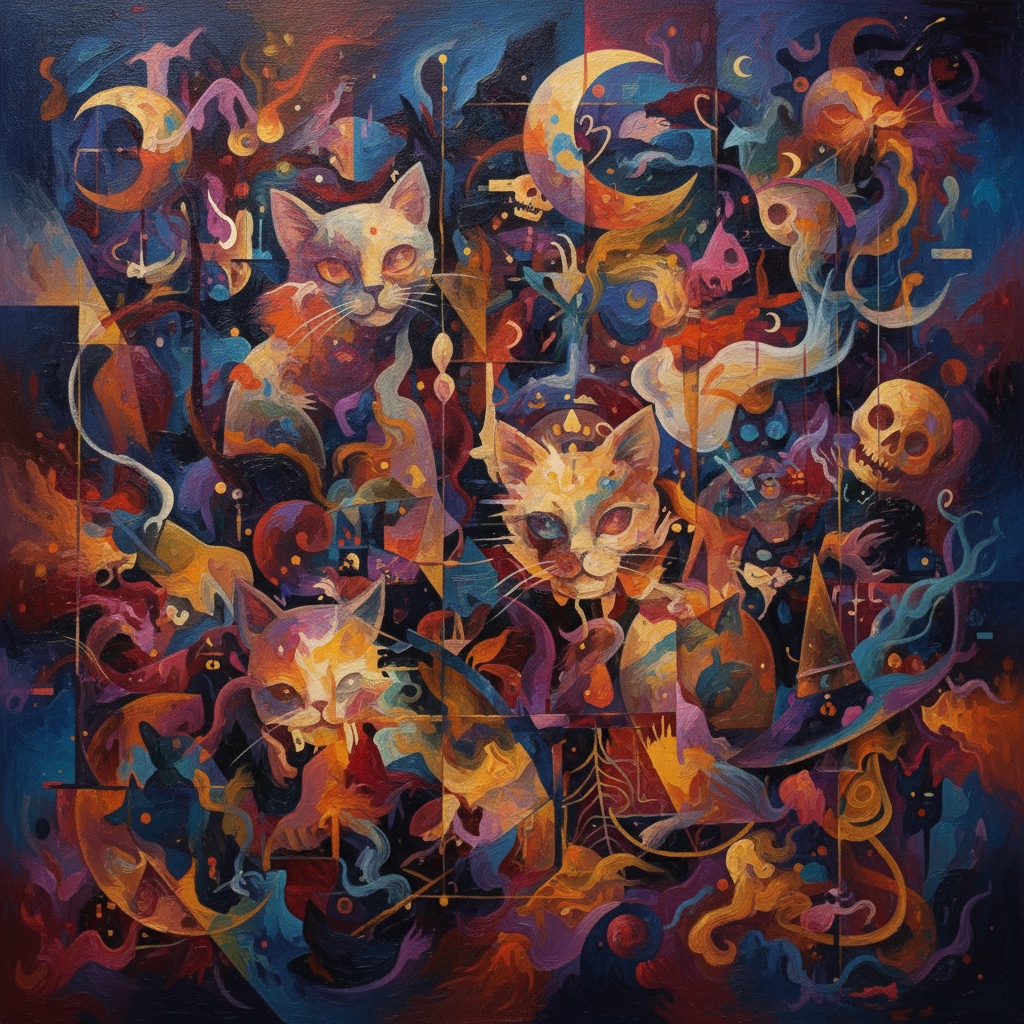
Halloween has captivated artists for centuries, inspiring works that explore our fascination with the macabre, the supernatural, and the mysterious. From medieval manuscripts to contemporary installations, Halloween motives have provided a rich visual language for artists to examine themes of mortality, fear, transformation, and the thin veil between worlds.
The Historical Roots of Halloween Imagery
The artistic representation of Halloween themes stretches back far beyond the modern celebration. Medieval and Renaissance artists frequently depicted death, demons, and the supernatural in their works, often as moral warnings or religious allegories. The *danse macabre* (dance of death) motif, popular in 15th-century European art, showed skeletons leading people from all walks of life to their graves—a powerful reminder of mortality that resonates with Halloween’s themes. Artists like Hieronymus Bosch created nightmarish visions filled with grotesque creatures and hellish landscapes that feel remarkably aligned with Halloween aesthetics. His triptych *The Garden of Earthly Delights* features fantastical demons and surreal imagery that could easily illustrate our darkest Halloween tales.
The Romantic Era: Embracing the Gothic
The 18th and 19th centuries saw the rise of Romanticism and Gothic literature, which profoundly influenced visual art. Artists became increasingly interested in the sublime, the mysterious, and the terrifying aspects of nature and the supernatural. Francisco Goya’s *Black Paintings*, particularly *Saturn Devouring His Son*, embody the horrific and nightmarish qualities that Halloween celebrates. His witches’ sabbath scenes directly engage with folklore and superstition, depicting gatherings of witches and demons with unsettling realism. Henry Fuseli’s *The Nightmare* (1781) remains one of the most iconic Halloween-adjacent artworks, showing a sleeping woman with a demonic incubus perched upon her chest whilst a ghostly horse emerges from darkness. This painting captures the essence of nocturnal terror and supernatural visitation that defines Halloween imagery.
Symbolism and Decadence: The Late 19th Century
The Symbolist movement embraced death, mysticism, and the occult with particular fervour. Artists like Odilon Redon created dreamlike, often disturbing images featuring floating heads, spiders, and mysterious figures that seem pulled from nightmares. Edvard Munch’s *The Scream* (1893), whilst not explicitly Halloween-themed, captures existential dread and psychological terror in a way that resonates deeply with the holiday’s exploration of fear. The skeletal, ghost-like figure and blood-red sky create an atmosphere of supernatural unease.
Modern and Contemporary Interpretations
The 20th century saw Halloween motives evolve alongside modern art movements. Surrealists like Salvador Dalí and Max Ernst created bizarre, dreamlike compositions featuring distorted bodies, strange creatures, and impossible scenarios that align perfectly with Halloween’s celebration of the uncanny. Pop Art brought Halloween imagery into the mainstream commercial sphere. Andy Warhol’s skull paintings and Roy Lichtenstein’s comic-book inspired works demonstrated how Halloween themes could be both serious and playful, high art and popular culture simultaneously. Contemporary artists continue to explore Halloween motives with fresh perspectives. Damien Hirst’s diamond-encrusted skull, *For the Love of God*, transforms the ultimate symbol of mortality into a glittering luxury object. Kara Walker’s silhouette installations often feature grotesque and violent imagery that confronts viewers with uncomfortable historical truths through a Gothic visual language.
Key Halloween Motives in Art
Skulls and Skeletons
The skull remains one of art history’s most enduring symbols, representing mortality, vanitas, and the transient nature of life. From medieval *memento mori* paintings to Mexican *Día de los Muertos* art, skeletal imagery reminds us of our shared fate whilst often celebrating life’s vitality.
Witches and the Occult
Witches have fascinated artists for centuries, from the grotesque hags in medieval manuscripts to the powerful, complex figures in contemporary feminist art. These images reflect changing attitudes towards female power, knowledge, and societal outsiders.
Ghosts and Spirits
Ethereal, translucent figures haunt countless artworks, representing memory, loss, and the persistence of the past. Japanese *yūrei* paintings, Victorian spirit photography, and contemporary ghost imagery all explore our relationship with the departed.
Transformation and Metamorphosis
Halloween celebrates transformation—humans becoming monsters, the living world giving way to supernatural forces. Artists have long been fascinated by metamorphosis, from Ovid-inspired classical paintings to body horror in contemporary art.
The Moon and Night
Nocturnal scenes bathed in moonlight create atmosphere and mystery. Artists use darkness and limited light sources to evoke the unknown, the hidden, and the potentially dangerous aspects of the night.
The Psychology of Halloween Art
Why do these dark themes captivate us? Halloween art allows us to confront our fears in a controlled, aesthetic context. By transforming terror into beauty, horror into art, we gain a sense of mastery over the things that frighten us. The pleasure we derive from Halloween imagery relates to the concept of the sublime—the simultaneous experience of fear and fascination. Artists working with Halloween motives tap into universal human experiences: our awareness of mortality, our curiosity about what lies beyond death, our fascination with the forbidden and transgressive. These works create a safe space to explore darkness, knowing we can return to the light.
Halloween Art in Popular Culture Today
Halloween motives permeate visual culture beyond traditional fine art. Illustration, graphic design, film, fashion, and digital art all draw heavily on Halloween aesthetics. Artists like Edward Gorey created distinctive Gothic illustration styles that influenced everything from book covers to animated films. Street art and graffiti often incorporate skulls, monsters, and dark imagery, bringing Halloween themes into public spaces. Digital artists create elaborate Halloween-themed works that circulate widely on social media, democratising access to seasonal art.
Conclusion: The Enduring Appeal
Halloween motives in art endure because they speak to fundamental aspects of human experience. They allow us to acknowledge darkness whilst celebrating creativity, to face mortality whilst affirming life, to explore fear whilst enjoying beauty.
As we continue to create and consume Halloween-inspired art, we participate in an ancient tradition of using visual imagery to process the mysterious, frightening, and unknown aspects of existence. Whether through classical paintings in museums or digital illustrations on our screens, Halloween art reminds us that darkness and light, fear and fascination, death and life exist in constant, creative tension.
This Halloween season, take time to appreciate the artistic traditions that have shaped our visual celebration of the spooky and supernatural. From old masters to contemporary creators, artists have given us powerful ways to engage with the shadows—and perhaps, in doing so, to better appreciate the light.
- Behind-the-scenes of Artwork Creation
- History of Art
- Local Art Scene in Southend-on-Sea
- Nature and Cat Art Technics
- Navigating Social Media & AI in Art in 2025
- Seasonal Reflections
- Thoughts on AI Art, Traditional Art, and Creativity
- Uncategorized

 Milena Skulimowska Visual Artist

Leave a comment