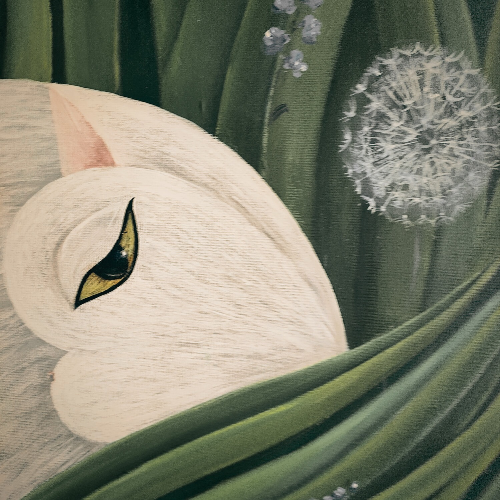
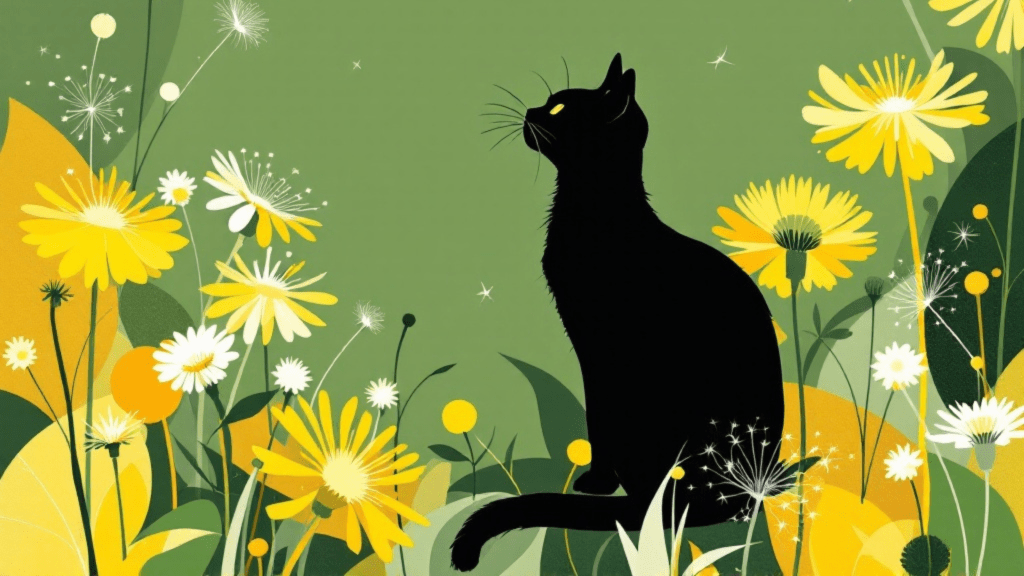
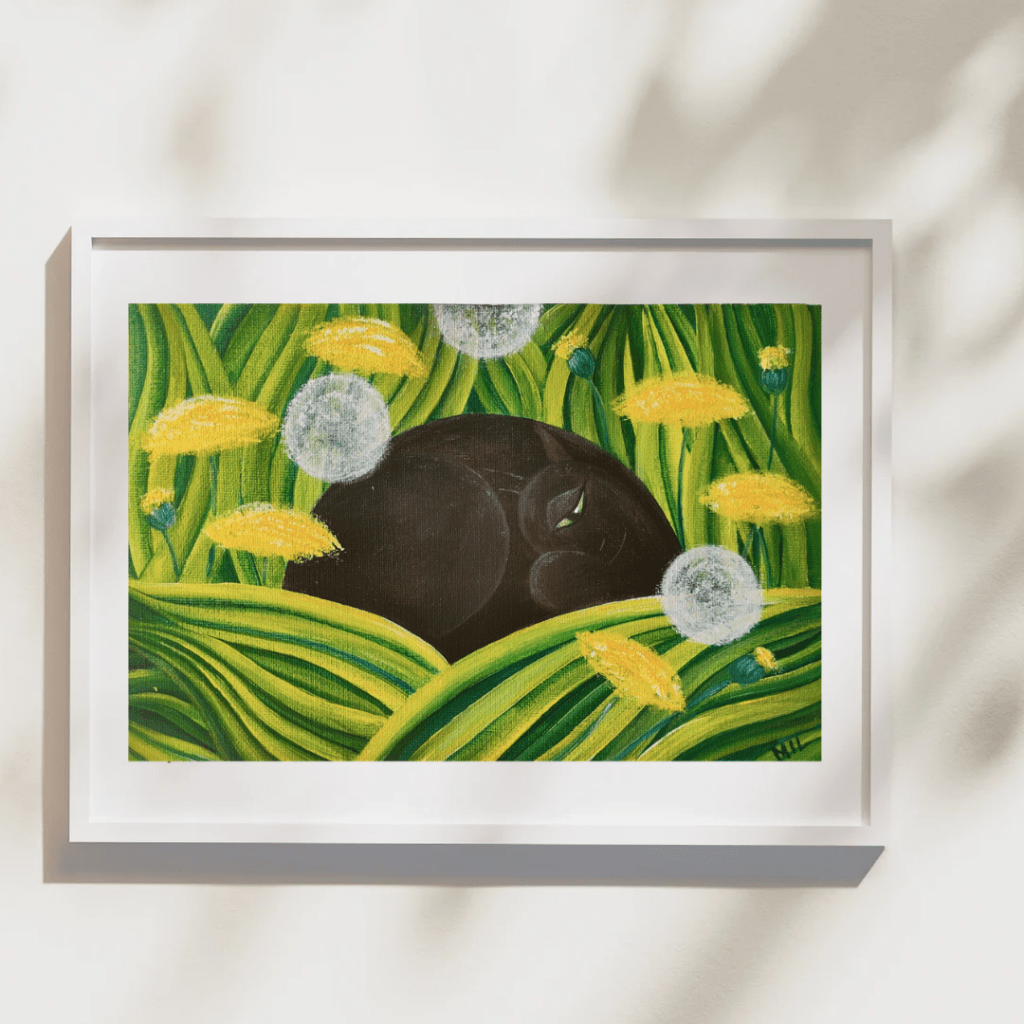
As a pet portrait artist specializing in cats, I’m excited to share my creative process for transforming a candid moment into an artistic interpretation. Today, I’ll walk you through how I created this dreamy portrait of a black cat among dandelions, showcasing my signature style that blends realism with whimsical natural elements.
Finding the Perfect Reference
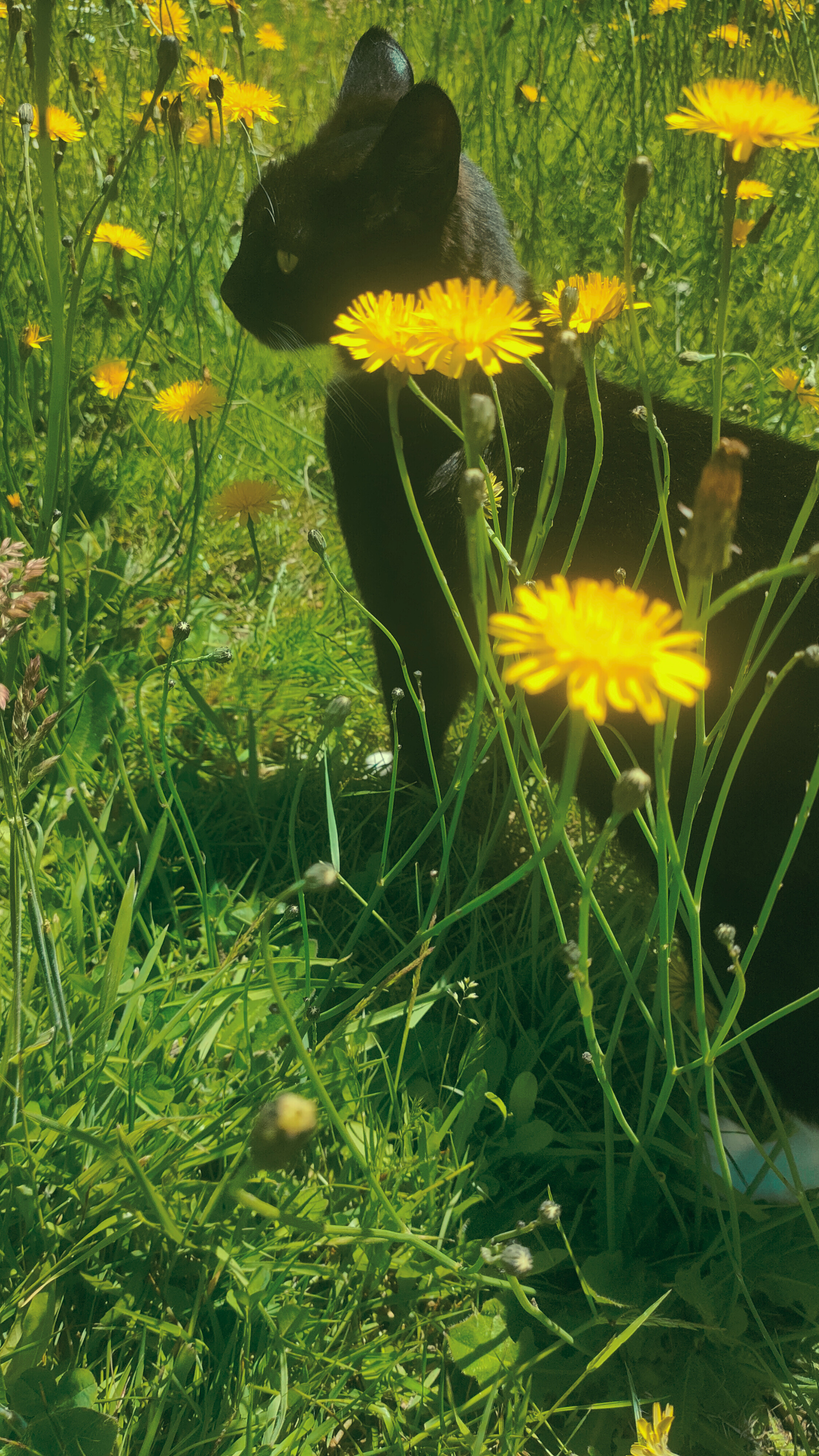
The journey began with a magical reference photo – a black cat partially hidden among vibrant yellow dandelions. What made this photo special was the natural contrast between the dark silhouette of the cat and the bright, cheerful flowers. When choosing reference photos for pet portraits, I always look for these kinds of organic moments that tell a story.
The Creative Process
1. Composition and Initial Sketch
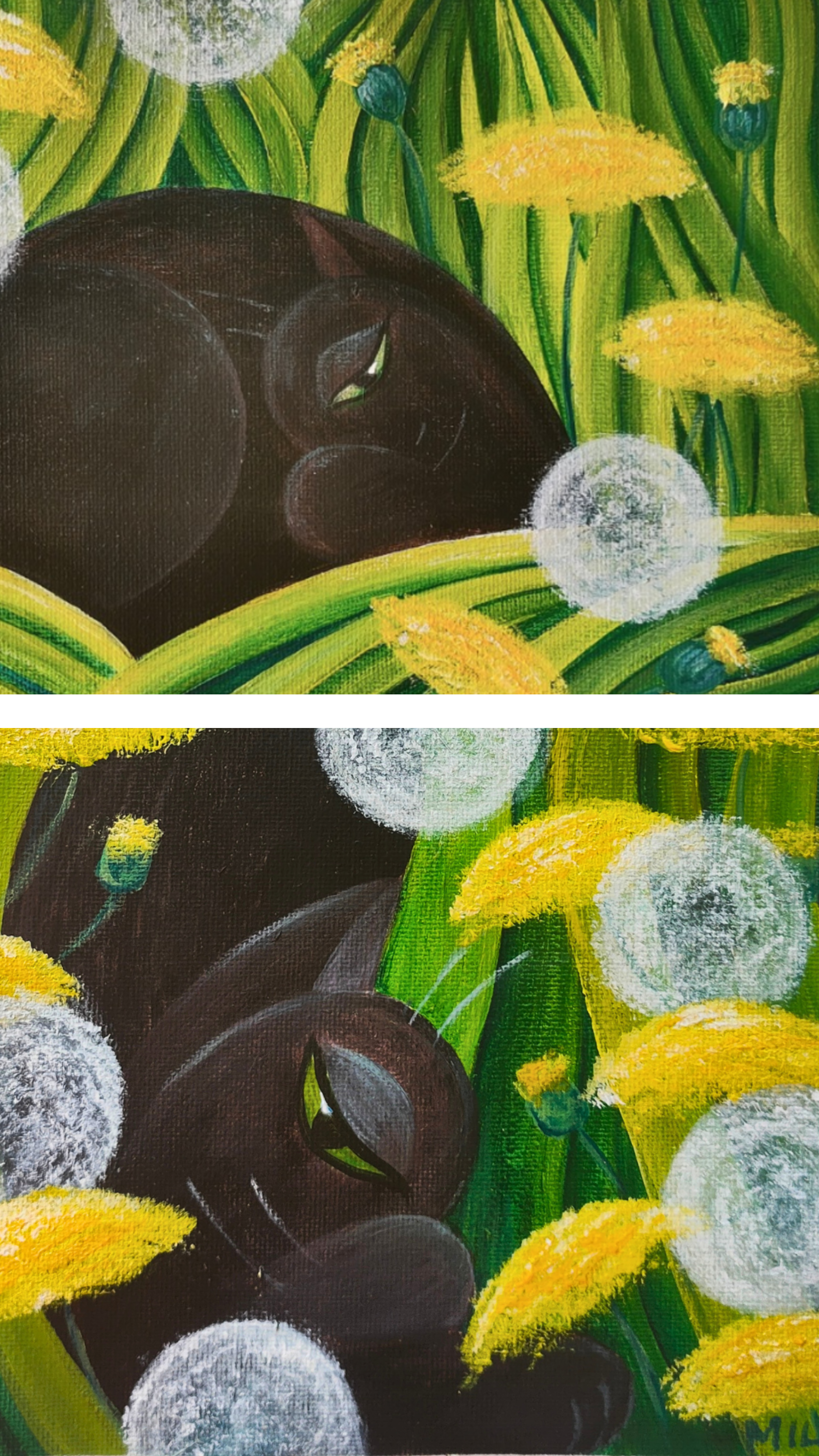
For this piece, I decided to emphasize the playful hide-and-seek element of the original photo. In my acrylic painting, I positioned the black cat as a central figure, surrounded by stylized dandelions that create a natural frame. This composition draws the viewer’s eye while maintaining the spontaneous feel of the original moment.
2. Color Palette
I chose to work with:
– Rich blacks for the cat’s fur
– Vibrant yellows for the dandelions
– Various shades of green for the grass
– White highlights to add dimension
3. Painting Technique
My approach combines several techniques:
– Building layers of color to create depth
– Using varied brushstrokes to capture different textures
– Adding stylized elements while maintaining the cat’s recognizable features
– Incorporating geometric and organic shapes, true to my contemporary style
The Final Result
The finished painting captures not just the physical likeness of the cat, but also the magical moment of discovery – a black cat in its secret garden of dandelions. The simplified background and bold color choices reflect my preference for less realistic, more interpretative art while still honoring the subject.
Tips for Creating Your Own Pet Portraits
1. Start with a strong reference photo that captures your pet’s personality
2. Sketch your composition lightly before committing to paint
3. Build layers gradually, starting with basic shapes
4. Pay special attention to the eyes – they’re the window to your pet’s soul
5. Don’t be afraid to add your own artistic interpretation
6. Include environmental elements that tell a story
Would you like me to expand on any of these aspects or share more specific techniques about how I achieved certain effects in the painting?
Discover more of my cat portraits at my Cat Artwork Portfolio!
- Behind-the-scenes of Artwork Creation
- History of Art
- Local Art Scene in Southend-on-Sea
- Nature and Cat Art Technics
- Navigating Social Media & AI in Art in 2025
- Seasonal Reflections
- Thoughts on AI Art, Traditional Art, and Creativity
- Uncategorized



 Milena Skulimowska Visual Artist
Leave a comment