
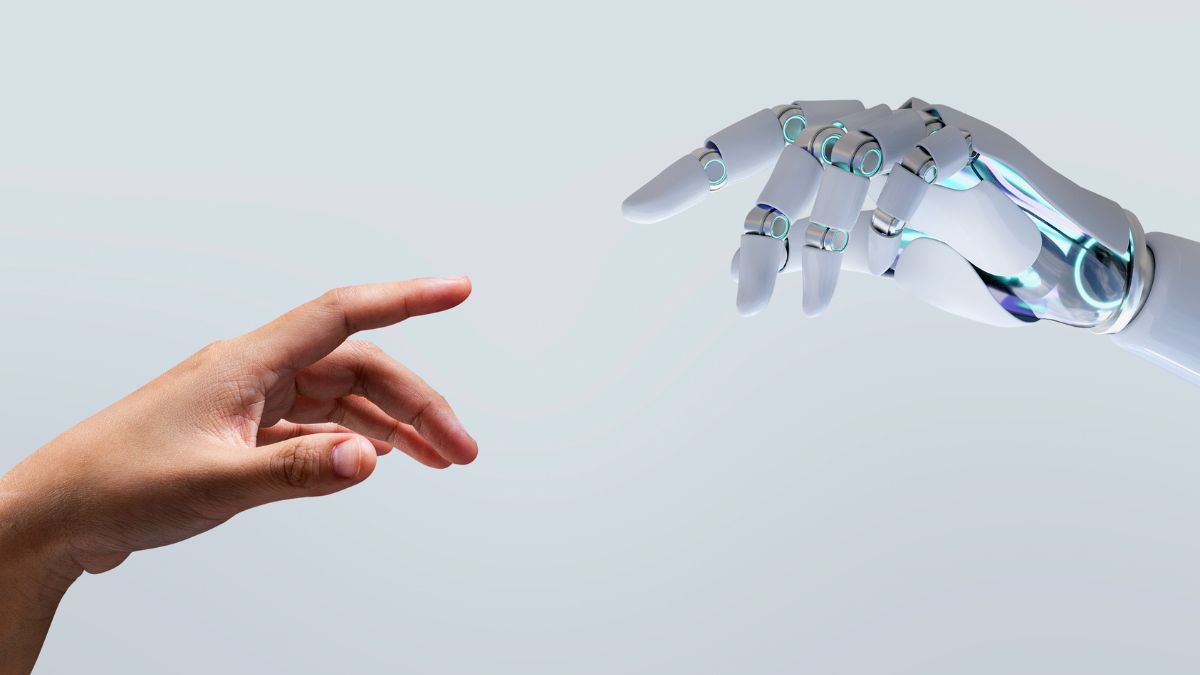
I hear it all the time: “AI is going to take artists’ jobs.” And what’s interesting is that this opinion often comes from people who don’t really make art, don’t spend hours learning a medium, and don’t understand how personal (and stubborn) creativity can be.
I’m not saying the conversation isn’t worth having. It is. But I think it’s often framed in a way that’s too dramatic and too simplisticlike there’s one finish line and AI is sprinting toward it.
My view is different: creativity is limitless. The fact that AI can generate images doesn’t mean there will be less creativity in the world, or less art for artists to make. If anything, it proves how hungry we are for visuals, stories, and style.
Why I don’t see AI art as a threat
For me, art has never been a single lane. It’s a landscape. There’s room for realism and abstraction, for minimalism and maximalism, for traditional acrylic painting and digital illustration. New tools don’t erase the old ones, they just add more ways to make.
So when I look at AI-generated art, I don’t automatically feel threatened. I see it the same way I see other artists: as another aesthetic, another approach, another way of making images.
And that’s the key point for me: it’s not a competition. It’s preference.
Not every artwork is for everyone. Not every style is meant to land with every person. Some people will love the look of AI art. Some people won’t. Some will want something hand-painted, textured, imperfect, and undeniably human. Others will want something sleek, surreal, or hyper-polished.
That’s not a crisis. That’s taste.
The “AI will replace artists” argument misses what art really is
When people talk about AI replacing artists, I think they’re imagining art as a product factory: you need an image, you get an image, job done.
But for many of us, art isn’t just the final image.
It’s the process. The decisions. The time spent staring at a piece and thinking, “Something is off, but I don’t know what yet.” It’s the mistakes that turn into style. It’s the years of learning how colour behaves, how composition changes the mood, how a tiny detail can make a piece feel alive.
Even when the end result is “just an image,” the human part is what gives it weight.
Tool vs artist: I don’t think it has to be a fight
People love to ask: Is AI a tool, or is it an artist?
Honestly, I don’t feel the need to force a single answer.
Sometimes AI is clearly being used as a tool, a way to brainstorm, to explore variations, to speed up parts of a workflow. Other times, the output is the point, and the person using it is curating rather than crafting in the traditional sense.
But even then, the conversation I find more useful is: What do we value in art?
Because the value isn’t always the same.
Some people value:
- The story behind the work
- The human touch and the imperfections
- The craft and skill built over time
- The emotional connection to the maker
- The aesthetic alone (no backstory needed)
None of those are “wrong.” They’re just different ways of relating to art.
What I think AI changes (and what it doesn’t)
I do think AI changes the speed of image-making. It changes access. It changes what’s possible for people who don’t have years to learn a medium.
But I don’t think it changes the human desire to make things with our hands, to express something personal, to create meaning.
If anything, I think it will make human-made work more intentional. More clearly chosen.
Because when images become abundant, what stands out is what feels specific. What feels like someone.
My personal line: I care about honesty
This is where I land, personally.
I’m not interested in policing what counts as art. I’m interested in honesty about the process.
If something is AI-generated, I think it should be labelled as such. Not because it’s shameful, but because it’s part of the context. Just like I’d want to know if something is an acrylic painting, a digital illustration, a collage, or a photograph.
The medium matters, not as a hierarchy, but as information.
There is room for all of it
I don’t believe AI is the end of art. I think it’s one more chapter.
Artists will keep making work because we can’t help it. Because it’s how we process the world. Because it’s how we connect. Because it’s how we play.
And audiences will keep choosing what they lovenot based on fear, but based on aesthetics, values, and preference.
So no, I don’t see AI art as a threat. I see it as another presence in the creative ecosystem.
And I’m still going to paint.
If you’ve been thinking about this too, I’d love to know: do you see AI as a tool, a separate category of art, or something else entirely?
- AI and Social Media
- Behind-the-scenes of Artwork Creation
- Events
- Seasonal Reflections
- Thoughts on Creativity


Leave a Reply