
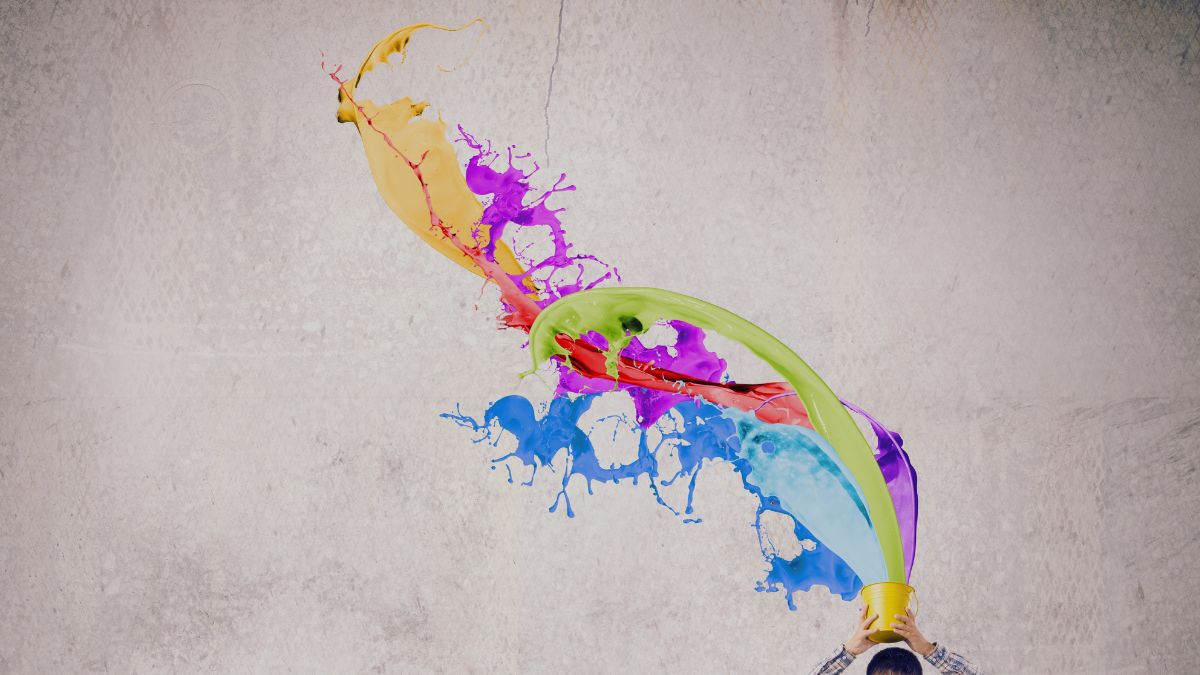
Creativity is often treated like a lightning bolt: rare, dramatic, and reserved for “talented” people. In reality, it’s closer to a muscle—something we build through practice, curiosity, and connection. As technology accelerates and trends come and go, the future of creativity won’t be defined by the newest tool. It will be defined by how human we stay while we use them.
A human-centered approach to creativity protects meaning, values the process, and keeps people (not platforms) at the heart of what we make.
What “human-centered creativity” actually means
Human-centered creativity is less about rejecting technology and more about choosing what we prioritise. It’s the difference between making work to keep up and making work that actually says something. In practice, it means leaning into intention, connection, and integrity.
At its core, this approach prioritises a few simple ideas: intention over output (why you’re making this), connection over performance (who it’s for and what you want them to feel), process over perfection (what you’re learning as you go), and integrity over trends (whether it still feels like you).
The pressures shaping creativity right now
We’re creating in a world that rewards visibility and volume, and that can quietly reshape how we think about our own work. When everything is measured, compared, and optimised, it’s easy to lose the thread of what you actually care about.
Some of the biggest pressures show up like this:
- an always-on culture where silence feels like falling behind;
- algorithm-driven sameness where what performs gets repeated until originality narrows;
- comparison fatigue that makes it hard to hear your own voice;
- tool overload, where more options create less clarity.
A human-centered approach is a response to these pressures. It helps you make work that lasts longer than a trend cycle.
The future of creativity is relational
The most powerful creative work doesn’t just look good—it creates a relationship. It can connect you to your own story, connect your audience to a feeling they recognise, and connect people to each other through what they share, gift, or keep close.
In a world where content is endless, what stands out is what feels personal, specific, and emotionally true.
Practical shift: create for a person, not a feed
When you’re deciding what to make (or what to share), it helps to swap the performance question for a more human one. Instead of asking “Will this perform?”, try asking who you want to reach today, what they might need to feel, and what detail could make them pause.
That single shift changes everything—from your tone to your pacing to the choices you make about what to include.
Technology will change the tools, not the need for meaning
New creative tools can help us sketch faster, test ideas, edit smoother, and distribute wider. But the parts that make work memorable aren’t the features—they’re the human decisions behind them.
That’s because tools can’t replace taste (what you choose and what you leave out), judgment (what feels right for your values), lived experience (the subtlety behind your choices), or care (the attention you give to craft).
The future belongs to creators who can use tools without losing their voice.
Practical shift: use tools to amplify, not to outsource
A useful rule of thumb is to decide what you’re willing to hand over—and what you want to keep close. Tools are brilliant for speed, structure, and support. The “why,” the story, and the final decisions are where the human voice belongs.
If a tool helps you get to your idea faster, great. If it starts replacing your idea, pause.
Creativity will become more sustainable—or it won’t survive
Burnout is one of the biggest threats to creative work. If the future of creativity is going to be bright, it has to be sustainable: sustainable schedules, sustainable expectations, and sustainable self-talk.
A human-centered approach treats rest as part of the process, not a reward for finishing.
Practical shift: build a “minimum viable practice”
When life is busy, the goal isn’t to do everything—it’s to keep the thread unbroken. Think of the smallest version of your creative practice you can maintain without resentment.
That might look like 15 minutes of sketching, one photo a day for visual inspiration, a weekly “idea walk” with voice notes, or a single page of journaling.
Consistency beats intensity, especially long-term.
The next era will reward originality, not polish
I think we’re already seeing a shift: audiences are tired of overly curated perfection. People want work that feels real and alive.
That aliveness can show up in rough edges, honest captions, behind-the-scenes process, and the story behind the piece. Human-centered creativity invites people into the making, not just the finished product.
Practical shift: share process with intention
If you want to build trust (and a creative audience that actually cares), sharing process is one of the simplest ways to do it. You don’t need to reveal everything—just one meaningful slice of the work.
You could share what you’re exploring before it’s “good,” a decision you made and why, a mistake that taught you something, or a detail you love that most people might miss.
This builds trust—and trust is the foundation of a creative audience.
A simple framework for human-centered creative decisions
When you’re unsure what to make next, a quick check-in can bring you back to what matters. It doesn’t need to be complicated; it just needs to be honest.
Ask yourself: Meaning (what do I want this to say?), Emotion (what do I want someone to feel?), Craft (what skill am I practicing here?), Energy (do I have the capacity for this right now?), and Integrity (will I still be proud of this in a year?).
If you can answer those, you’re not just creating—you’re building a body of work.
Closing: the future is human
The future of creativity isn’t about competing with technology. It’s about remembering what creativity is for.
It’s for making sense of life. For connection. For beauty. For play. For healing. For telling the truth in a way only you can.
So if you’re building your creative future, start here: protect your attention, honour your process, and keep your work rooted in what makes you human.
If you’re reading this, I’d love to know: what helps you feel most connected to your creativity right now?
- AI and Social Media
- Behind-the-scenes of Artwork Creation
- Events
- Seasonal Reflections
- Thoughts on Creativity


Leave a Reply